Whoop vs Oura Ring: Which Recovery Wearable Should You Choose in 2026?
Whoop or Oura Ring to track your recovery? We compared both wearables on price, sleep, sport, and subscription. Honest verdict inside.
Summarize this article with
The essentials in 30 seconds
Whoop and Oura Ring are the two recovery-tracking references, but they play different games. Whoop is a band built for strain, Oura a ring built for sleep.
- 1.Whoop ($199 to $359/year, hardware included) bets everything on training load and athletic recovery: Strain, Recovery, and Sleep scores, VO2 max, heart rate zones. The best pick for demanding athletes.
- 2.Oura Ring 4 (€399 to €499 + €5.99/month) excels at sleep, body temperature, and women's cycle tracking, in a discreet ring format. The best pick for sleep and everyday health.
- 3.Neither handles nutrition. That's the problem Atlo solves: an AI coach that reads your Whoop or Oura data (via Apple Health) and cross-references it with your nutrition and training. 7-day free trial, then €8.99/month.
- 4.Our verdict: Whoop if you train hard and want to manage your load. Oura Ring if you want to optimize sleep and track health discreetly. Atlo if you want an AI to turn that data into a complete action plan.
Interactive Quiz
Which recovery wearable is right for you?
Answer 6 quick questions to find the best tool for your training style.
What's your main goal with a wearable?
📖 Why Compare Whoop and Oura Ring?
Whoop and Oura Ring are the two most recommended recovery wearables by athletes and quantified-self enthusiasts. If you want to know whether you recover enough, sleep well, and whether your body is ready for the next session, you've inevitably come across these two names. But in 2026 they've specialized further, and the choice is more contrasted than ever.
We analyzed both devices in depth: format, price, subscription, data measured, strengths, and limitations. Here's what we found, and why a third, software-only option might just be the game-changer.
📱 The wearables in detail
We reviewed both devices, their official specs, prices, and user feedback. Here's our in-depth analysis of each wearable.
1. Whoop: the recovery band
Best for: athletes, training load, recovery | Price: $199/year membership (hardware included) | Rating: ★★★★☆
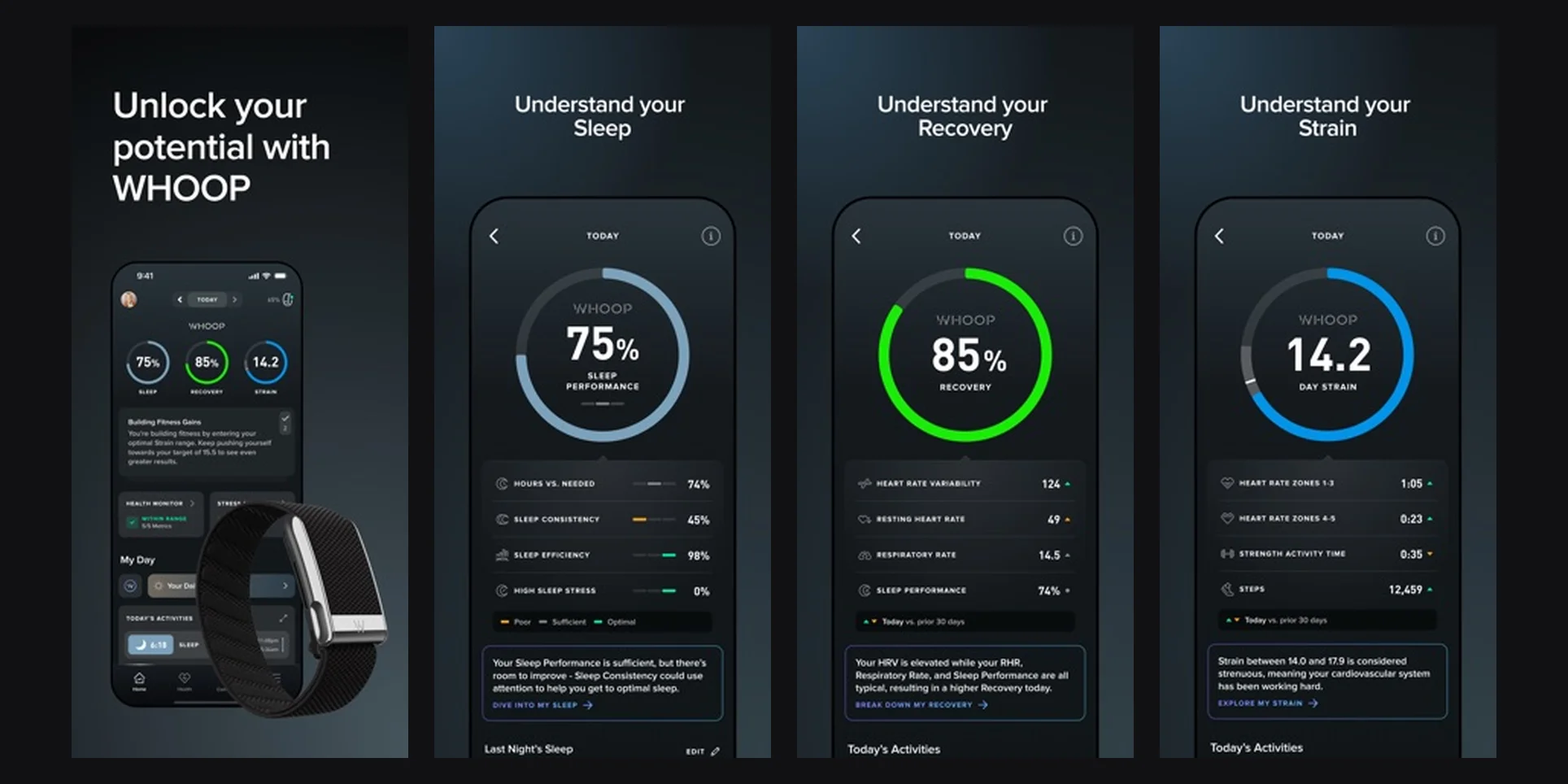
Whoop is a screen-free band worn 24/7, built for athletes who want to manage their training load. Launched in 2015, it was the first wearable entirely dedicated to recovery. In 2026, the Whoop 5.0 generation delivers 14+ days of battery life and charges on the wrist, without ever taking it off.
2. Oura Ring: the sleep ring
Best for: sleep, health, cycle tracking | Price: €399 to €499 + €5.99/month | Rating: ★★★★☆
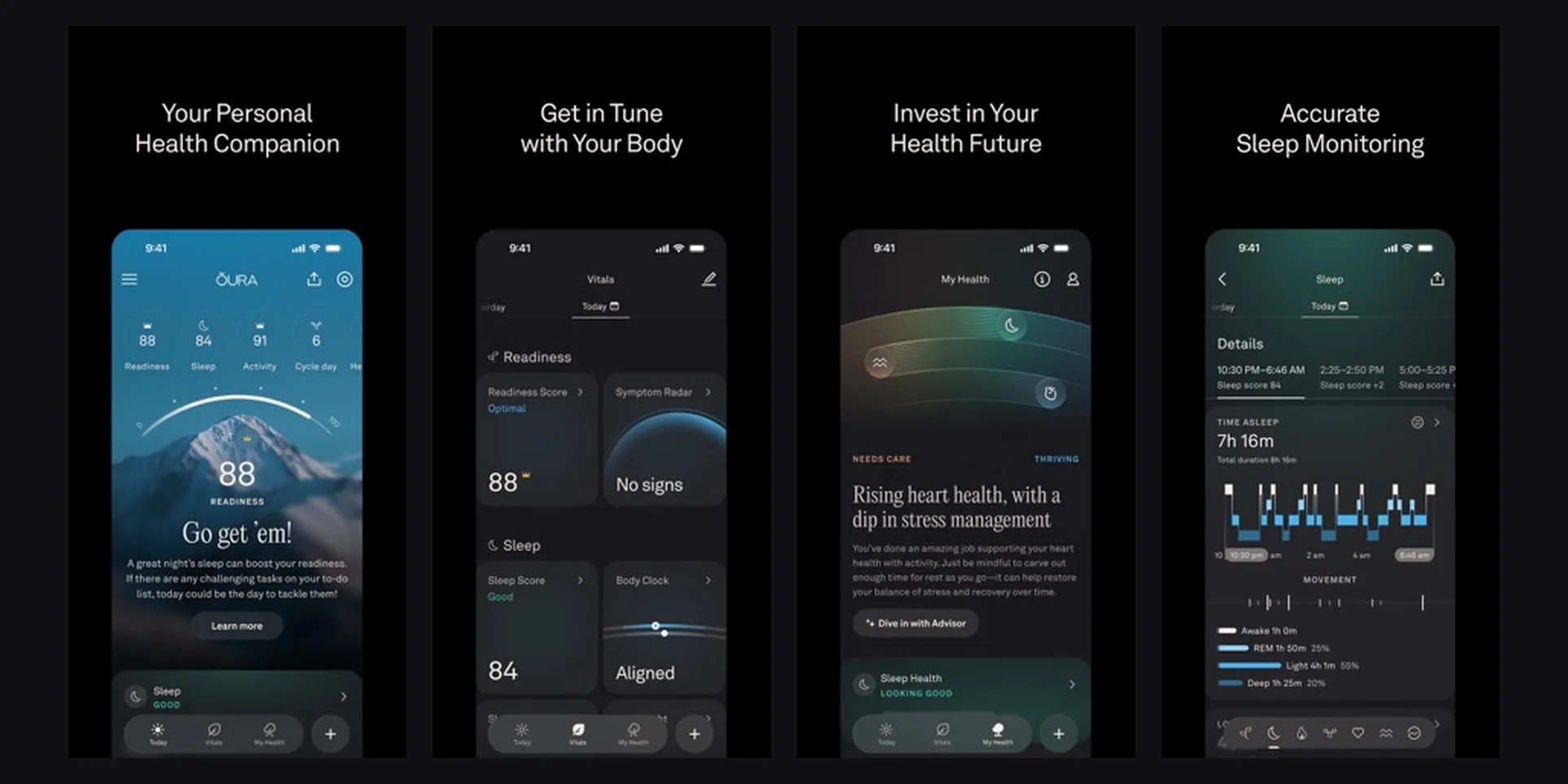
Oura Ring is a screen-free connected ring that disappears on your finger and made sleep its specialty. Launched in 2015 like Whoop, it took a more health-and-wellness-oriented trajectory. The Oura Ring 4 (2024) measures sleep, body temperature, heart rate, and activity, with 5 to 8 days of battery life.
💪 Whoop: Strengths and Weaknesses
Whoop built its reputation on a simple promise: tell an athlete whether they're ready to train hard today. Its Recovery score, crossed with the Strain and Sleep scores, forms a trio that many high-level athletes check every morning.
What Whoop Does Well
Training load management is the best on the market. The Strain score quantifies the cardiovascular and muscular effort of each day, and Whoop explicitly tells you whether your load is sufficient, optimal, or excessive. No other wearable translates the effort/recovery balance so directly.
The no-hardware-purchase economic model. The band is included in the membership, with a one-month free trial and a lifetime warranty while the membership is active. If the sensor fails, Whoop replaces it. That's real peace of mind compared to buying a €400 ring.
14-day battery life and on-wrist charging. The Whoop 5.0 charges with a sliding external battery pack, without ever removing the band. Result: no missed nights of sleep due to charging, a point rings handle less well.
Whoop's Limitations
The subscription is the most expensive on the market over time. At $199/year (One) or $239/year (Peak), a user pays between $400 and $480 over two years, without ever owning the hardware. If you stop paying, the band becomes useless.
Sleep tracking is good but not the best. Whoop estimates sleep from the wrist, a less accurate position than the finger for nocturnal heart rate. Oura Ring remains the reference for sleep-phase accuracy and body temperature.
No nutrition dimension. Whoop measures effort and recovery, but doesn't know what you eat. To connect your nutrition to your recovery, you'll need a second app.
😴 Oura Ring: Strengths and Weaknesses
Oura Ring made the opposite bet to Whoop: the discretion of a ring and sharp expertise in sleep and health. Its Readiness score, aggregating sleep, heart rate, temperature, and activity, has become the reference for anyone wanting a daily read on their body.
What Oura Ring Does Better
Sleep accuracy is the best on the market. Finger-based measurement captures heart rate and sleep phases more faithfully than the wrist, and the Oura Ring 4 further refined its sensors. If your number one goal is to understand and improve your sleep, this is the reference tool.
Temperature and women's cycle tracking is exceptional. Oura detects temperature variations to a hundredth of a degree, enabling menstrual cycle, fertility window, and general health tracking that Whoop doesn't match despite its recent hormonal insights.
Cost over time is gentler. Sure, you have to buy the ring (€399 to €499), but the €5.99 monthly subscription is much lighter than Whoop's. Over three years, Oura Ring works out notably cheaper.
Oura Ring's Limitations
Effort tracking is less rich than Whoop. Oura measures activity and workouts, but its activity score lacks the depth of Whoop's Strain for managing a demanding training load. A powerlifter or serious runner will find Whoop more relevant for planning.
The ring gets in the way of some gym movements. Wearing a ring during pull-ups, deadlifts, or barbell exercises can be uncomfortable, even dangerous for the finger. Many users remove it during strength training, creating gaps in effort data.
Like Whoop, no nutrition dimension. Oura tracks sleep and health, but not diet. To understand the impact of what you eat on your recovery, you'll need a separate app.
⚖️ Comparison Table: Whoop vs Oura Ring vs Atlo
Here's a direct comparison of key features. We evaluated each solution on 9 criteria essential for recovery tracking.
| Criteria | Whoop | Oura Ring | Atlo |
|---|---|---|---|
| Sleep tracking | ★★★★☆ | ★★★★★ | ★★★★☆ |
| Effort tracking (training load) | ★★★★★ | ★★★☆☆ | ★★★★☆ |
| Recovery score | ★★★★★ | ★★★★☆ | ★★★★☆ |
| Women's cycle tracking | ★★★★☆ | ★★★★★ | ★★★☆☆ |
| Nutrition tracking | ☆☆☆☆☆ | ☆☆☆☆☆ | ★★★★★ |
| Personalized coaching | ★★★★☆ | ★★★☆☆ | ★★★★★ |
| 24/7 wearing comfort | ★★★★☆ | ★★★★★ | ★★★★☆ |
| Daily activity tracking | ★★★★☆ | ★★★★☆ | ★★★★☆ |
| Value for money | ★★★☆☆ | ★★★★☆ | ★★★★☆ |
💰 Pricing Comparison
The economic model differs completely between the two, and it's worth examining before buying. Whoop works by subscription with hardware included, Oura Ring by buying the hardware then a light subscription. Here are the prices verified in August 2026.
Over two years, the math is telling: Whoop costs roughly $400 to $480 (One or Peak), while Oura Ring costs about €399 plus €144 of subscription, or €543. Over three years, the gap widens further in the ring's favor, since its monthly subscription is much lighter.
| Whoop | Oura Ring | Atlo | |
|---|---|---|---|
| Hardware | Included (band) | €399 to €499 | None (app) |
| Subscription | $199/yr (One), $239/yr (Peak) | €5.99/month or €69.99/year | €8.99/month or €69.99/year |
| Free trial | 1 month | 1 month of membership | 7 days |
🔬 How We Compared
We evaluated Whoop, Oura Ring, and Atlo the way a demanding user would, cross-referencing official specs and real-world feedback. Here's our methodology:
1. Product spec and official sheet analysis. We noted the sensors, scores, battery life, and features advertised on Whoop's and Oura's websites.
2. Measured data evaluation. We compared what each device actually measures: sleep, effort, recovery, temperature, cycle, activity, and how that data is turned into concrete recommendations.
3. Price verification. Prices were taken directly from the official websites (whoop.com and ouraring.com) in August 2026, and cross-checked with independent test reviews like PCMag and The Rundown.
4. Limitations analysis. For each solution, we identified not only what it does well, but also what it doesn't do, and for which profile these limitations are deal-breakers.
 And Where Does Atlo Fit In?
3. Atlo: The AI Coach That Reads Your Whoop and Oura Data
Best for: multi-pillar AI coaching | Price: 7-day free trial, then €8.99/month | Rating: ★★★★★
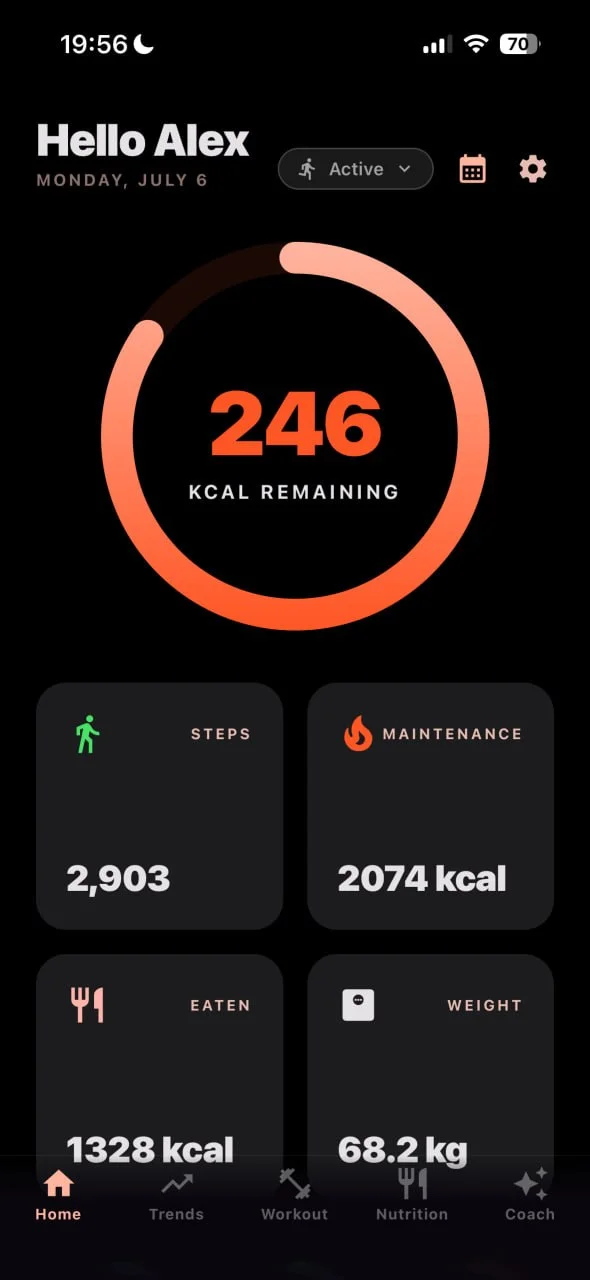
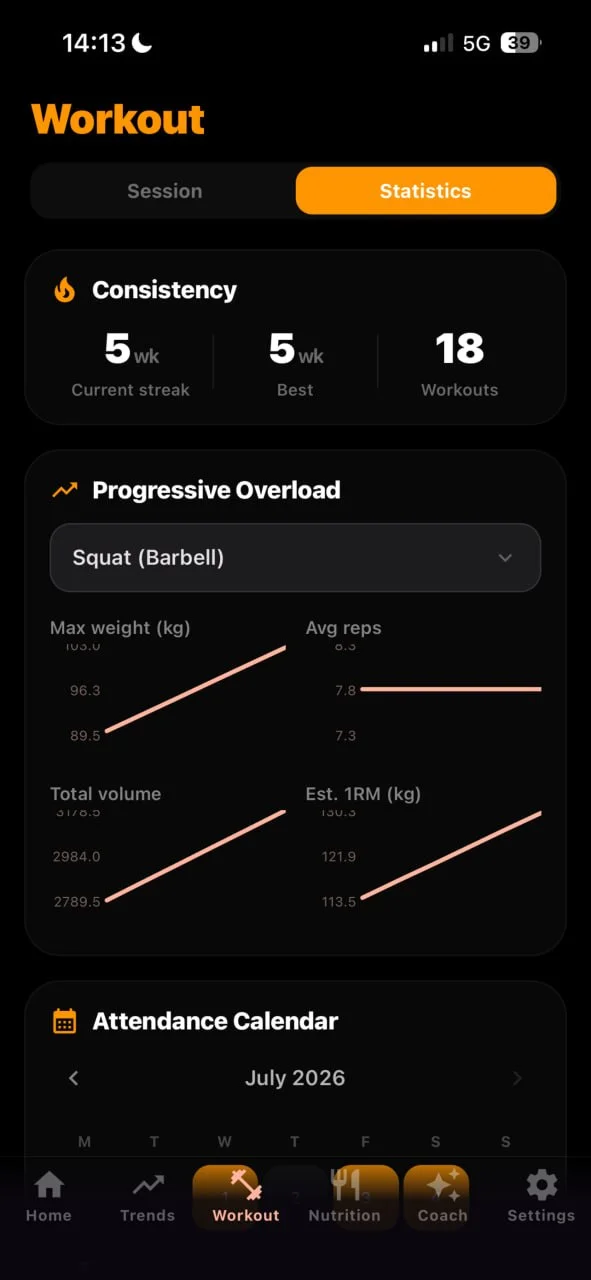
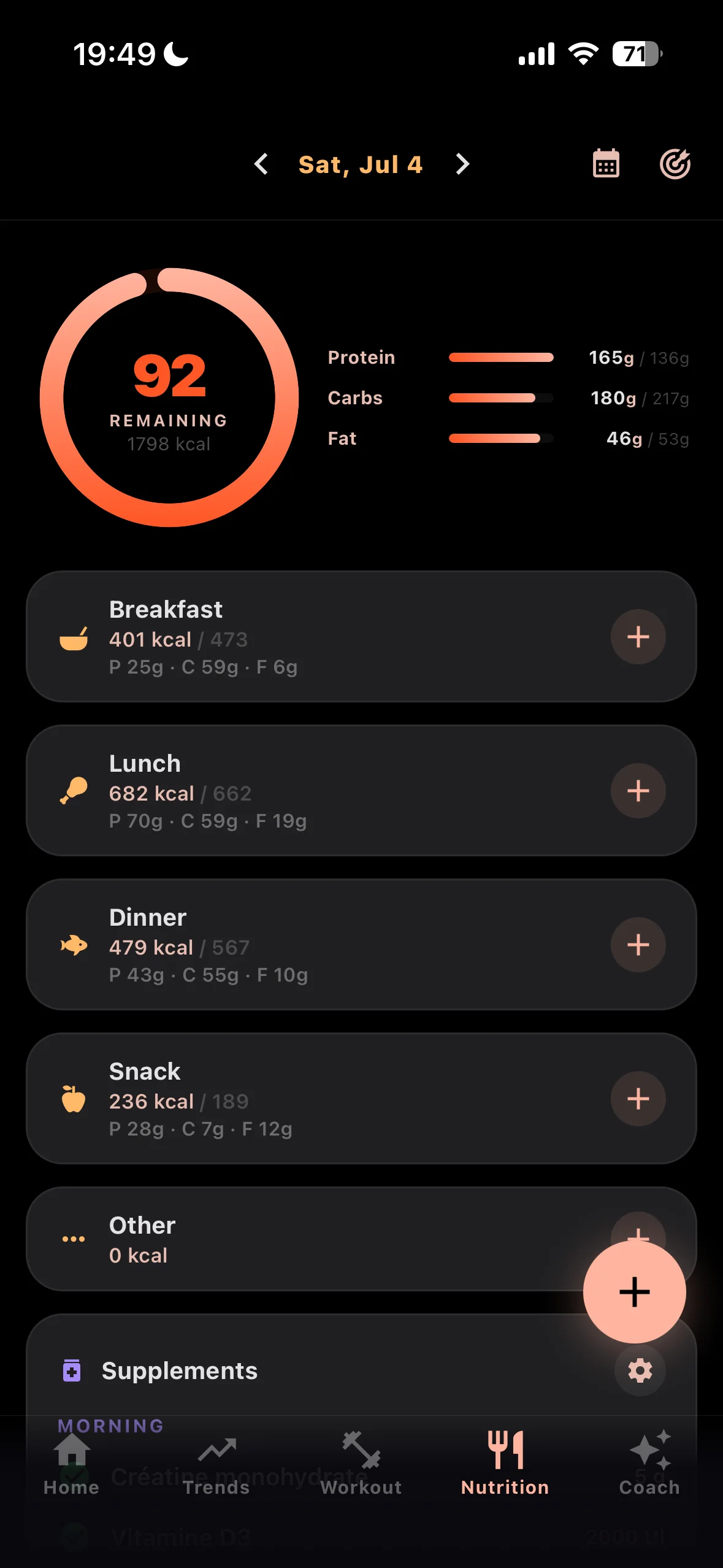
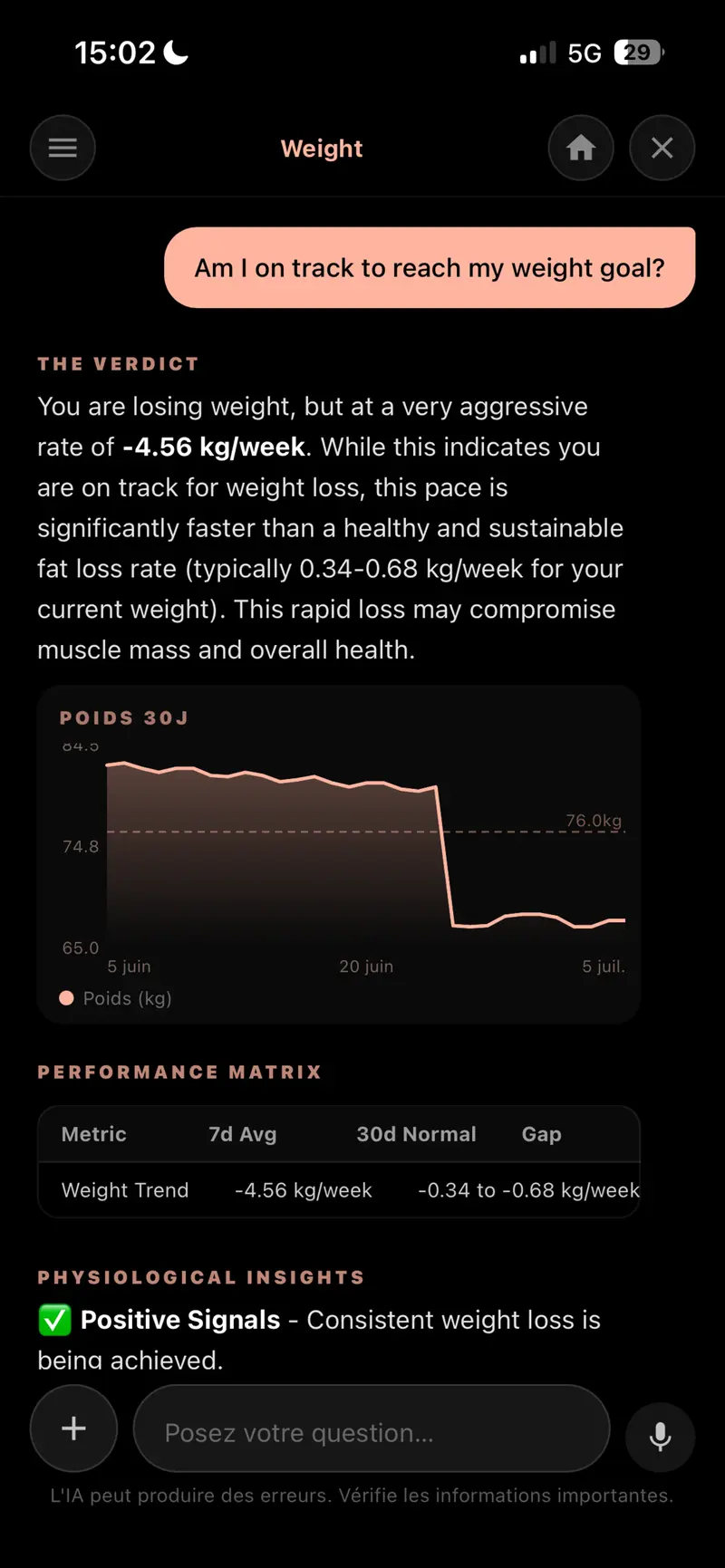
Atlo isn't a competing wearable, but an alternative from a different category: an AI coaching platform. Where Whoop and Oura measure data, Atlo turns it into an action plan. Concretely, Atlo pulls your Whoop or Oura data via Apple Health or Health Connect, then cross-references it with your nutrition and training.
Concretely, your Whoop recovery score or Oura temperature no longer stay isolated numbers. Atlo's AI coach links them to what you eat and your sessions: lowering your volume because your recovery is insufficient, increasing your carbs because your TDEE has progressed, or moving an intense session because your nocturnal temperature is off.
🎯 Our Verdict: Which One to Choose?
There is no universal winner. Whoop, Oura Ring, and Atlo don't target the same user. Here's our recommendation based on your profile.
Choose Whoop if...
You train hard and want to manage your training load precisely. Whoop is for you if you follow demanding training cycles, want to know every morning whether your body is ready for a big session, and are fine never owning the hardware (but getting a guaranteed lifetime replacement). Be ready for a higher subscription over time.
Choose Oura Ring if...
You want to optimize your sleep and track your health discreetly. Oura Ring is for you if sleep is your number one priority, if you want precise women's cycle and temperature tracking, and if you prefer a ring that disappears. Just accept removing it during some strength exercises, and paying for the hardware upfront.
Choose Atlo if...
You want more than a wearable: a coach that turns your data into a plan. Atlo is the only solution that connects your Whoop or Oura data to your nutrition and training via an AI coach. If you already wear a wearable (or an Apple Watch) and want to link recovery, diet, and sessions without juggling three apps, Atlo is for you. Note that Atlo is in pre-launch and doesn't make sensors: it complements your wearable, it doesn't replace it.
⭐ Who Should NOT Choose Atlo?
📚 Sources and References
These sources allowed us to verify prices, features, and user feedback.
- •WHOOP, Options d'abonnement (site officiel, 2026)
- •Oura Ring, site officiel et tarifs (2026)
- •PCMag, Oura Ring 4 vs. Whoop 5.0 : I Tested Both (2026)
- •The Rundown (Ashley Mateo), Whoop vs. Oura Ring: Which One Should You Get? (2023)
- •MagicFit, Oura Ring vs Whoop : quel wearable pour quel usage (juillet 2026)
- •Reddit r/ouraring, discussions communautaires Oura vs Whoop
🔗 Atlo Resources
Explore more content on sports-health performance:
Sports Recovery: The Complete Guide
Sleep, nutrition, active techniques: all the science-backed recovery methods.
Sleep and Recovery: How to Connect Them
Understand how your sleep influences your performance and muscle recovery.
Fitness App Comparison
Our complete comparison of the best fitness and nutrition apps in 2026.
❓ FAQ
📖 Read next
Whoop vs Fitbit: Which Screenless Tracker Should You Choose in 2026?
Sports Recovery: The Complete Guide
Best Fitness App 2026
Fitbit vs Garmin: Which Smartwatch Should You Choose in 2026?
Ready to connect recovery, nutrition, and training?
Join the Atlo waitlist to be among the first to try the AI coach that reads your Whoop or Oura data and turns it into a complete action plan.
lockNo spam. We'll email you at launch.