Fitbit vs Garmin: Which Smartwatch Should You Choose in 2026?
Fitbit or Garmin to track your health and workouts? We compared both brands on price, sleep, GPS, battery, and subscription. Honest verdict inside.
Summarize this article with
The essentials in 30 seconds
Fitbit and Garmin are the two big smartwatch brands, but they play different games. Fitbit targets everyday health, Garmin targets athletic performance.
- 1.Fitbit (now part of Google Health) excels at everyday health tracking: sleep, stress, heart rate, in affordable trackers like the Fitbit Air at €99.99. Some features require the Google Health Premium subscription at €8.99/month.
- 2.Garmin is the reference for athletes: GPS accuracy, multi-week battery life, advanced training metrics (VO2 max, training load, Body Battery). The Garmin Connect app stays free, with an optional Connect+ tier at $6.99/month.
- 3.Neither truly handles nutrition or end-to-end coaching. That's the problem Atlo solves: an AI coach that reads your Fitbit or Garmin data (via Apple Health or Health Connect) and cross-references it with your nutrition and training. 7-day free trial, then €8.99/month.
- 4.Our verdict: Fitbit if you want simple, affordable health tracking. Garmin if you train seriously and want the best GPS accuracy. Atlo if you want an AI to turn that data into a complete action plan.
Interactive Quiz
Which watch is right for you?
Answer 6 quick questions to find the best tool for your training style.
What's your main goal?
📖 Why Compare Fitbit and Garmin?
Fitbit and Garmin are the two most established smartwatch brands in sport and health, but they don't target the same audience. Fitbit, acquired by Google and now folded into Google Health, bets on everyday health tracking: sleep, stress, heart rate, in simple, affordable devices. Garmin remains the reference for athletes when it comes to GPS accuracy, battery life, and training metrics.
We analyzed both ecosystems in depth: models, prices, subscriptions, measured data, strengths, and limitations. Here's what we found, and why a third, software-only option might just be the one that ties it all together.
📱 The two ecosystems in detail
We reviewed the current lineups of both brands, their official prices, and user feedback. Here's our in-depth analysis of each ecosystem.
1. Fitbit: everyday health tracking
Best for: everyday health, sleep, beginners | Price: €99.99 (Air) to ~€299 (Sense 2) + Premium €8.99/month | Rating: ★★★★☆
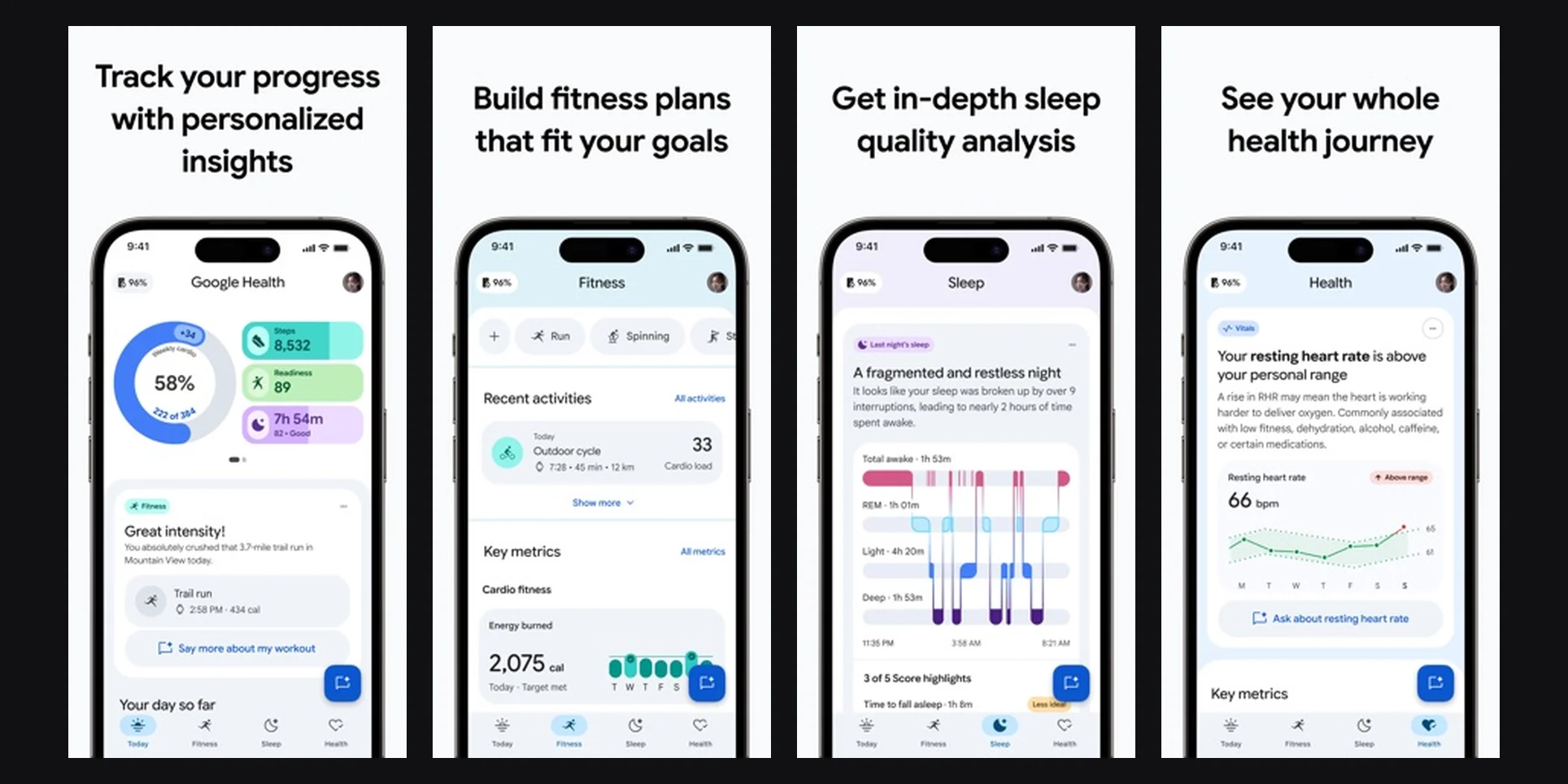
Fitbit is the mainstream health-tracking brand, now integrated into Google Health. Its 2026 lineup runs from the screen-free Fitbit Air tracker (€99.99, launched June 2026) to the fuller Charge 6 and Sense 2 watches, plus Google's Pixel Watch. The experience is built to be simple: sleep, heart rate, stress, daily activity, without overthinking it.
2. Garmin: the athletes' GPS watch
Best for: athletes, GPS, battery | Price: ~€249 to ~€999, Connect free | Rating: ★★★★☆
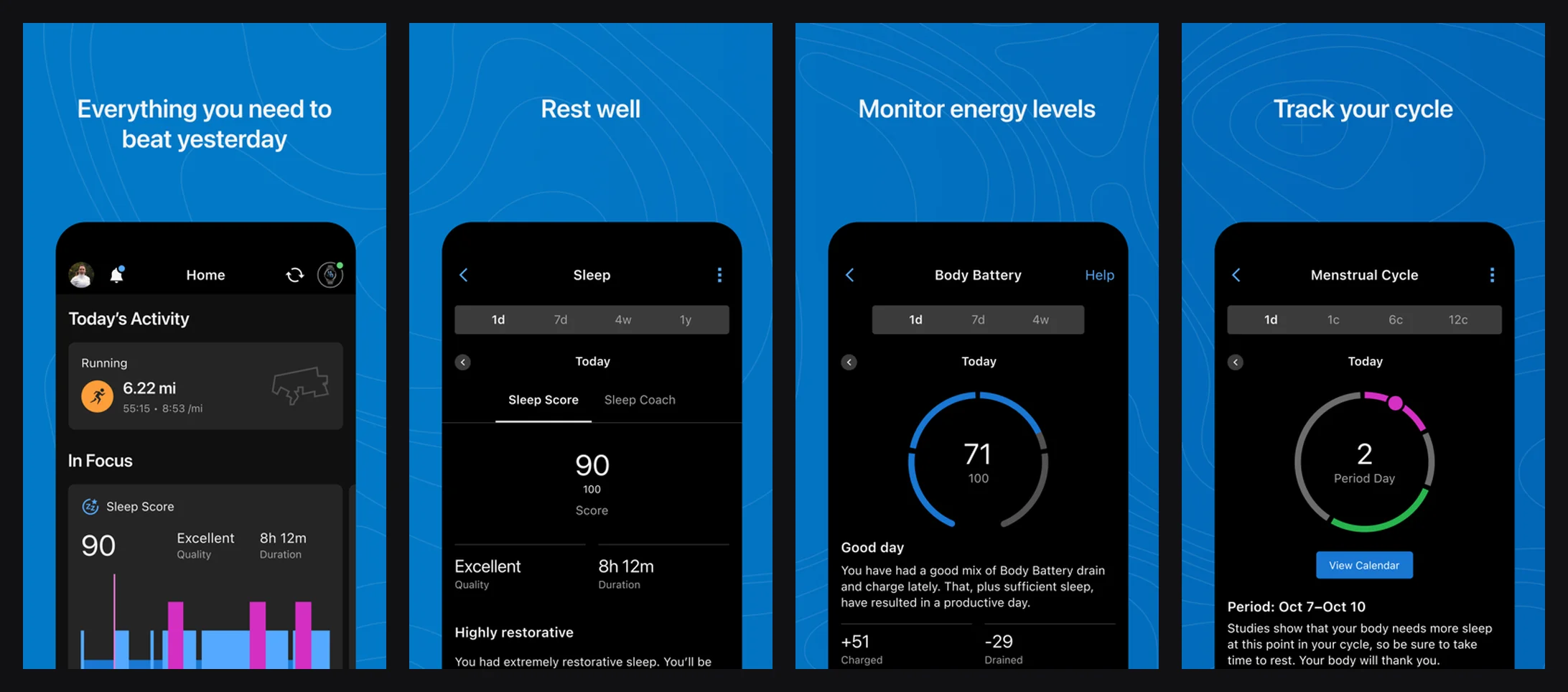
Garmin is the reference for demanding athletes, from amateur runners to triathletes. Its 2026 lineup spans the Vivoactive 5 and Forerunner 165 (running) up to the Fenix 8 and Enduro 3 for ultra-endurance. The common thread: razor-sharp GPS accuracy, multi-day to multi-week battery life, and a depth of sports data no other mainstream brand matches.
😴 Fitbit: Strengths and Weaknesses
Fitbit built its reputation on a simple promise: make health tracking accessible to everyone. Its Daily Readiness score, EDA sensor stress tracking, and sleep tracking make it the easiest tool to adopt for anyone who wants an overview of their health without sports jargon.
What Fitbit Does Well
Sleep and health tracking is among the most readable on the market. Fitbit breaks your nights into clear phases, gives you a score, and adds stress and resting heart rate tracking. Many former Garmin users admit Fitbit presents sleep better.
The entry-level offering is unbeatable. The Fitbit Air at €99.99, screen-free and very light, is the most accessible health tracker on the market, with three months of Google Health Premium included. The Charge 6 remains excellent value around €159.
Google integration is a real plus. Assistant, Pixel Watch, the Android ecosystem: everything is built to work together. If you already live in Google's world, Fitbit slots in naturally.
Fitbit's Limitations
GPS accuracy trails Garmin. Fitbit does GPS, but the accuracy and lock speed don't match a Garmin device. For serious running or cycling, the track and metrics will be less reliable.
Battery life is measured in days, not weeks. Most Fitbits last 3 to 7 days, far from the weeks Garmin advertises. And recharging interrupts sleep tracking unless you plan it carefully.
Training metrics remain limited. No advanced VO2 max, no fine-grained training load, no advanced mapping. An athlete planning training cycles will find Fitbit too light on the performance side.
🏃 Garmin: Strengths and Weaknesses
Garmin made the opposite bet to Fitbit: depth of sports data over simplicity. Its flagship scores, VO2 max, Body Battery, Training Readiness, and training load, have become the reference for athletes who want to know precisely where they stand.
What Garmin Does Better
The GPS is the best in the mainstream market. Fast lock, precise track, multi-GNSS support: Garmin is the reference for running, trail, cycling, and triathlon. If your outing must be measured to the meter, this is the brand to choose.
Battery life is spectacular. From several days on lifestyle watches to several weeks on the Fenix and Instinct in watch mode, Garmin buries the competition. You never miss a night of sleep to recharge again.
The core app remains free. Garmin Connect gives access to most metrics without a subscription. The new Connect+ tier ($6.99/month) adds AI features and advanced analysis, but basic tracking stays completely free, a major advantage over Fitbit.
Garmin's Limitations
The entry price is notably higher. Expect about €249 for a Vivoactive 5 and over €999 for a Fenix 8. That's a serious investment, where Fitbit starts at €99.99.
The learning curve is steeper. Garmin Connect is powerful but dense. A beginner who just wants a sleep score can feel overwhelmed by the menus, widgets, and dozens of metrics.
Sleep and stress tracking is good but less readable than Fitbit. Garmin measures sleep well, but the presentation and stress tracking are less polished than Fitbit, which stays more accessible on everyday health.
⚖️ Comparison Table: Fitbit vs Garmin vs Atlo
Here's a direct comparison of key features. We evaluated each solution on 9 criteria essential for health and sport tracking.
| Criteria | Fitbit | Garmin | Atlo |
|---|---|---|---|
| Sleep tracking | ★★★★☆ | ★★★★☆ | ★★★★☆ |
| GPS accuracy / outdoor sports | ★★★☆☆ | ★★★★★ | ☆☆☆☆☆ |
| Training metrics | ★★★☆☆ | ★★★★★ | ★★★★☆ |
| Daily activity tracking | ★★★★★ | ★★★★☆ | ★★★★☆ |
| Personalized coaching | ★★★☆☆ | ★★★☆☆ | ★★★★★ |
| Nutrition tracking | ★★★☆☆ | ★★☆☆☆ | ★★★★★ |
| Recovery and HRV | ★★★☆☆ | ★★★★☆ | ★★★★☆ |
| Battery life | ★★★☆☆ | ★★★★★ | ☆☆☆☆☆ |
| Value for money | ★★★★☆ | ★★★★☆ | ★★★★☆ |
💰 Pricing Comparison
The economic model differs completely between the two, and it's worth examining before buying. Fitbit sells affordable devices but pushes the Google Health Premium subscription. Garmin sells pricier devices but keeps the base app free. Here are the prices verified in August 2026.
Over three years, the math is instructive: a Fitbit Air with Google Health Premium comes to about €99.99 plus €324 of subscription, or €424. A Garmin Vivoactive 5 with the free app comes to about €249, with no required subscription. The matchup isn't as simple as it looks.
| Fitbit | Garmin | Atlo | |
|---|---|---|---|
| Hardware | €99.99 (Air) to ~€299 (Sense 2) | ~€249 (Vivoactive 5) to ~€999 (Fenix 8) | None (app) |
| Subscription | Google Health Premium €8.99/month | Connect free, Connect+ $6.99/month or $69.99/year | €8.99/month or €69.99/year |
| Free trial | 3 months (with Fitbit Air) | 30 days (Connect+) | 7 days |
🔬 How We Compared
We evaluated Fitbit, Garmin, and Atlo the way a demanding user would, cross-referencing official specs and real-world feedback. Here's our methodology:
1. Lineup and spec-sheet analysis. We noted the models, sensors, battery life, and features advertised on Fitbit's (Google Store) and Garmin's official websites.
2. Measured data evaluation. We compared what each brand actually measures: sleep, GPS, effort, recovery, stress, activity, and how that data is turned into concrete recommendations.
3. Price verification. Prices were taken directly from the official websites (store.google.com and garmin.com) in August 2026, and cross-checked with independent comparisons like connectmysport.fr and braceletsmartwatch.fr.
4. Limitations analysis. For each solution, we identified not only what it does well, but also what it doesn't do, and for which profile these limitations are deal-breakers.
 And Where Does Atlo Fit In?
3. Atlo: The AI Coach That Reads Your Fitbit and Garmin Data
Best for: multi-pillar AI coaching | Price: 7-day free trial, then €8.99/month | Rating: ★★★★★
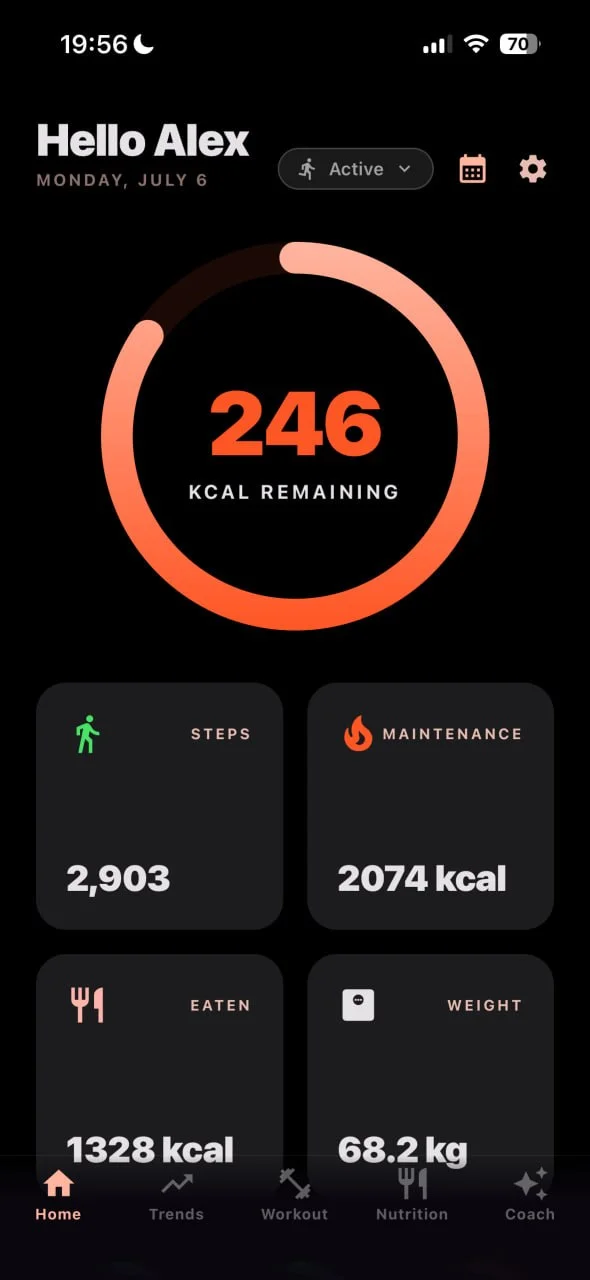
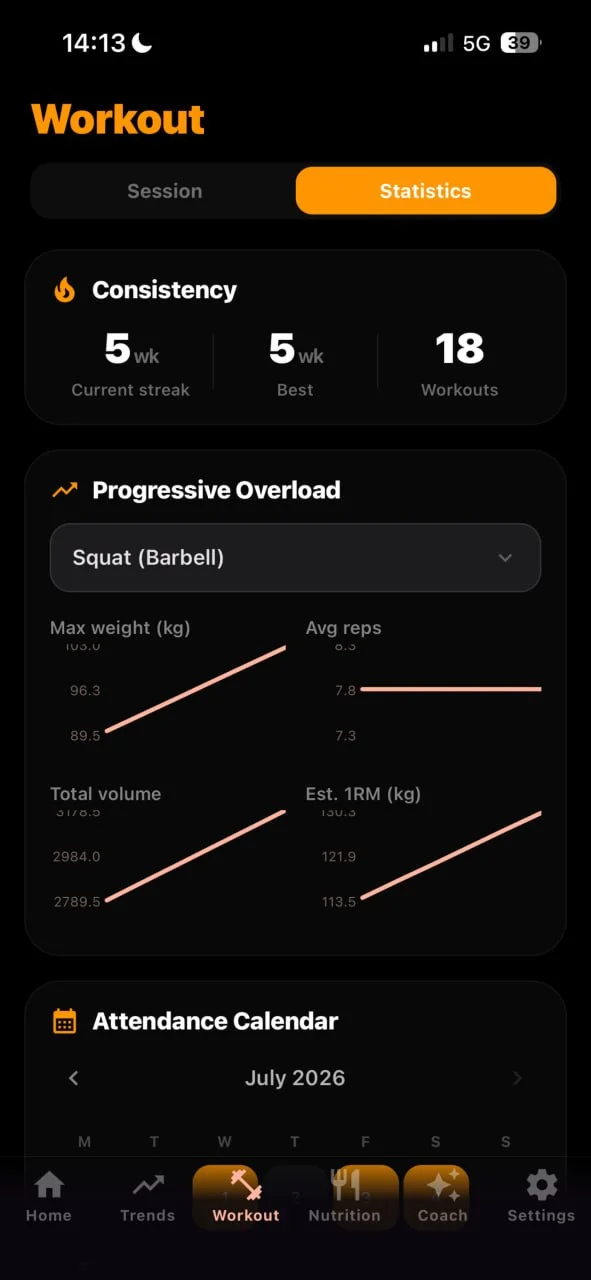
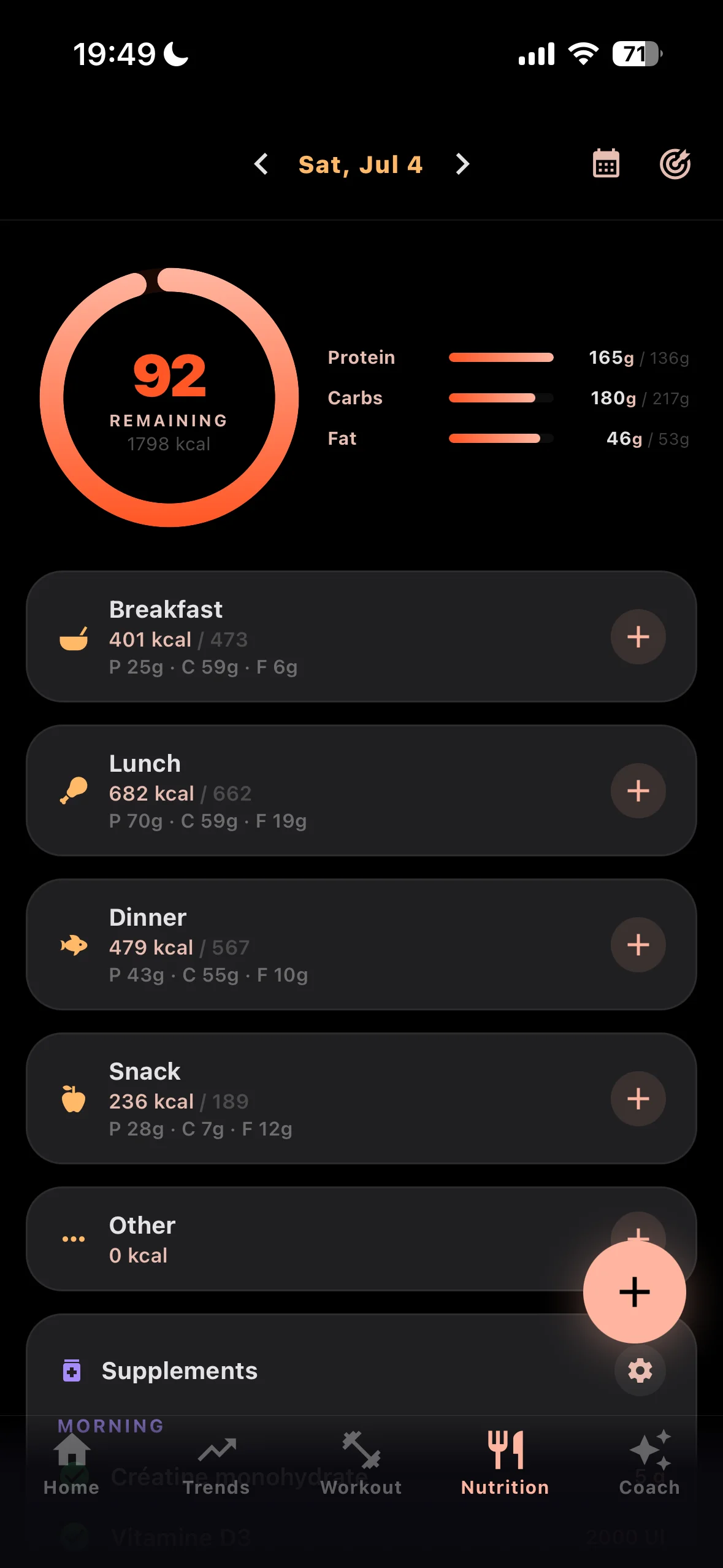
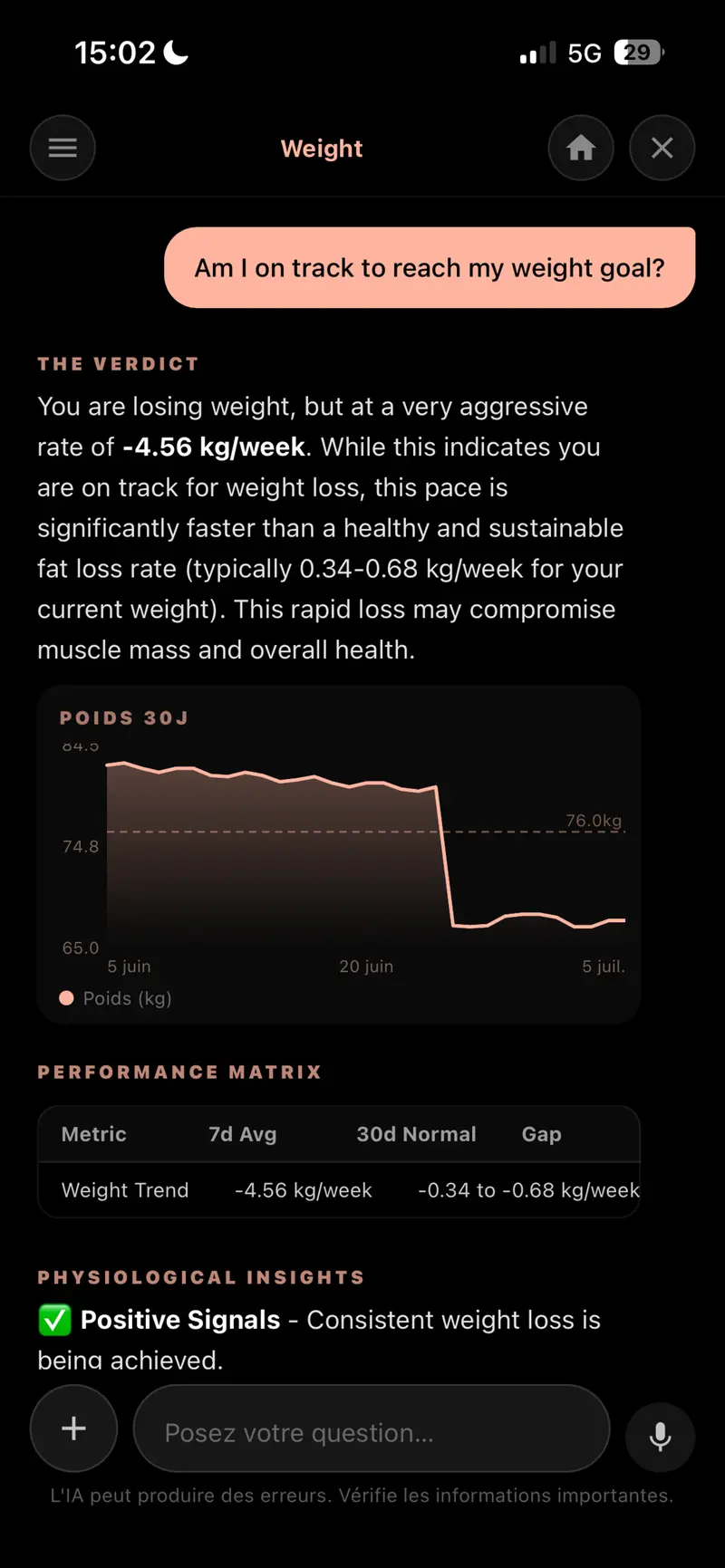
Atlo isn't a competing watch, but an alternative from a different category: an AI coaching platform. Where Fitbit and Garmin measure data, Atlo turns it into an action plan. Concretely, Atlo pulls your Fitbit or Garmin data via Apple Health or Health Connect, then cross-references it with your nutrition and training.
Concretely, your Garmin Body Battery or Fitbit sleep score no longer stay isolated numbers. Atlo's AI coach links them to what you eat and your sessions: lowering your volume because your recovery is insufficient, increasing your carbs because your TDEE has progressed, or moving an intense session because your resting heart rate is off.
🎯 Our Verdict: Which One to Choose?
There is no universal winner. Fitbit, Garmin, and Atlo don't target the same user. Here's our recommendation based on your profile.
Choose Fitbit if...
You want simple, affordable health tracking. Fitbit is for you if your goal is sleep, stress, and everyday activity, if you're a beginner wanting a readable app, and if you already live in the Google ecosystem. Just accept paying Google Health Premium to unlock every feature, and don't count on competition-grade GPS.
Choose Garmin if...
You train seriously and want accurate GPS and multi-week battery life. Garmin is for you if you run, ride, or swim regularly, if you want deep training metrics, and if a free base app appeals to you. Be ready for a higher hardware investment and a steeper learning curve.
Choose Atlo if...
You want more than a watch: a coach that turns your data into a plan. Atlo is the only solution that connects your Fitbit or Garmin data to your nutrition and training via an AI coach. If you already wear a watch and want to link training, diet, and sleep without juggling three apps, Atlo is for you. Note that Atlo is in pre-launch and doesn't make watches: it complements your device, it doesn't replace it.
⭐ Who Should NOT Choose Atlo?
📚 Sources and References
These sources allowed us to verify prices, features, and user feedback.
- •Garmin, site officiel et tarifs (2026)
- •Garmin, plans d'abonnement Connect+ (site officiel, 2026)
- •Google Store, montres et trackers Fitbit (site officiel, 2026)
- •Blog Google France, Fitbit Air : le nouveau tracker santé (juin 2026)
- •Connect My Sport, Garmin vs Fitbit : comparatif des montres connectées
- •Bracelet Smartwatch, comparaison Fitbit vs Garmin
- •Reddit r/Garmin, retour d'expérience de ceux qui sont passés de Fitbit à Garmin
🔗 Atlo Resources
Explore more content on sports-health performance:
Sports Recovery: The Complete Guide
Sleep, nutrition, active techniques: all the science-backed recovery methods.
Whoop vs Oura Ring: Which Wearable to Choose
Our comparison of the two most recommended recovery wearables, with an honest verdict.
Fitness App Comparison
Our complete comparison of the best fitness and nutrition apps in 2026.
❓ FAQ
📖 Read next
Whoop vs Fitbit: Which Screenless Tracker Should You Choose in 2026?
Whoop vs Oura Ring: Which Wearable to Choose
Sports Recovery: The Complete Guide
Ready to connect your watch to your nutrition and training?
Join the Atlo waitlist to be among the first to try the AI coach that reads your Fitbit or Garmin data and turns it into a complete action plan.
lockNo spam. We'll email you at launch.