Hevy vs Fitbod: Which Strength Training App Should You Choose?
Hevy or Fitbod for organizing strength workouts? Compare tracking, workout suggestions, and the limits of each approach.
Summarize this article with
The essentials in 30 seconds
Hevy primarily suits someone who wants to log workouts and build routines. Fitbod is a better fit for someone who wants workout suggestions based on available equipment and history.
- 1.Choose Hevy if your priority is a clear workout log, reusable routines, and set tracking.
- 2.Choose Fitbod if you want the app to help compose your next session. Its suggestions still need review against your level and recovery.
- 3.Our verdict: Hevy feels more natural for the self-directed lifter, Fitbod for someone who wants a proposed structure.
- 4.Atlo addresses a broader use case: connecting training, nutrition, and recovery. 7-day free trial, then €8.99/month.
Interactive Quiz
Hevy, Fitbod, or a broader approach?
Answer 6 quick questions to clarify what you need.
How do you prepare workouts?
🧭 Hevy or Fitbod: The Short Answer
Hevy is first a tracking tool, while Fitbod is first a workout-composition aid. With Hevy, you enter the gym with a plan, a routine, or at least a clear idea. With Fitbod, you can start with a goal, available equipment, and history to receive a proposal.
The comparison on workoutlab.app captures this divide: Hevy serves conventional strength logging, while Fitbod generates workouts. The useful question is simple: do you mainly want to record a plan, or get help building one?
📱 The Apps in Detail
We compared the two models through workout preparation, in-session logging, progress, and practical limits. Screenshots come from public app listings. Market information was cross-checked against comparisons consulted on October 28, 2026.
1. Hevy: the structured workout log
Best for: routines and set logging | Rating: ★★★★☆
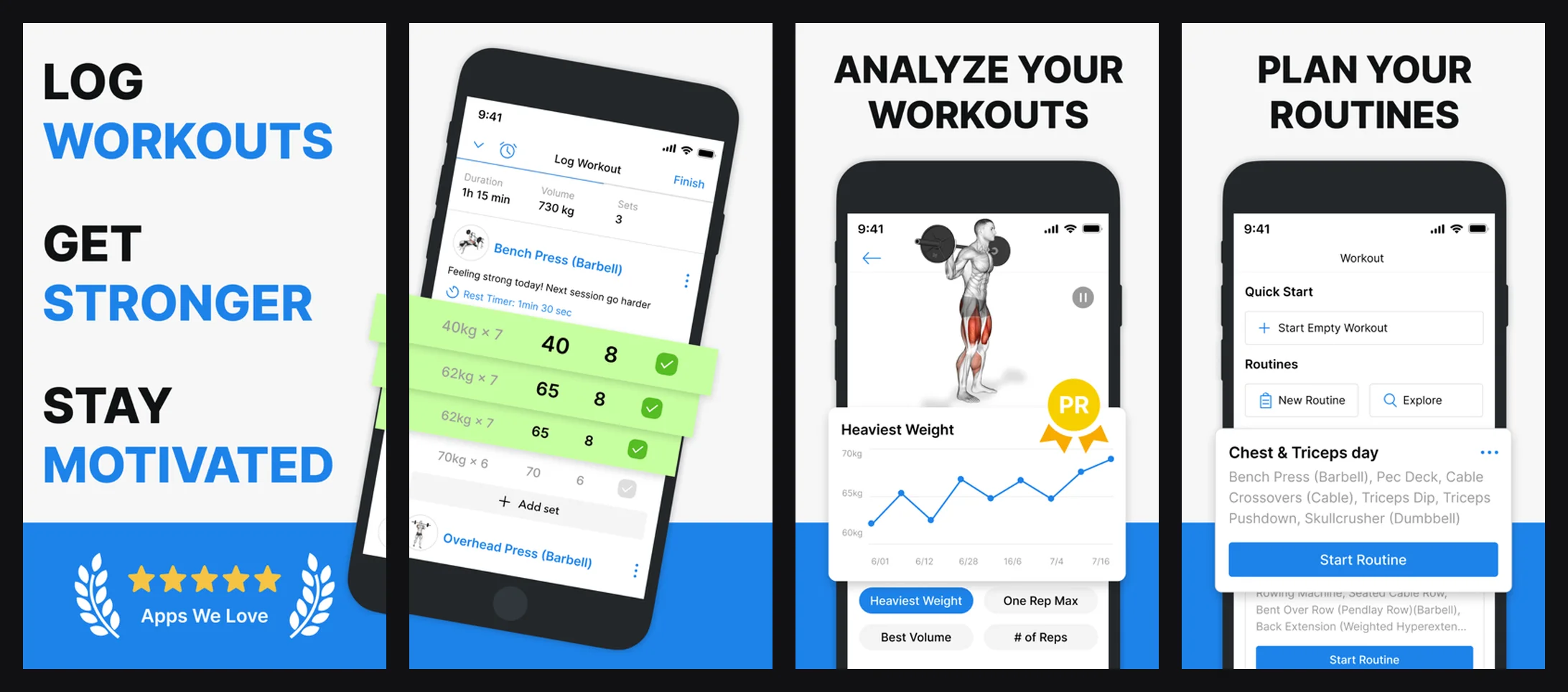
Hevy suits people who want to log exercises, sets, reps, and loads consistently. Its value is making decisions repeatable: a routine stays accessible, a session is recorded, and progress is easier to review.
Its strength is continuity. If you already have a program, a digital log reduces omissions between workouts. A set log does not decide for you whether planned volume remains reasonable after a difficult week.
2. Fitbod: a workout proposed from your context
Best for: workout ideas and variable equipment | Rating: ★★★★☆
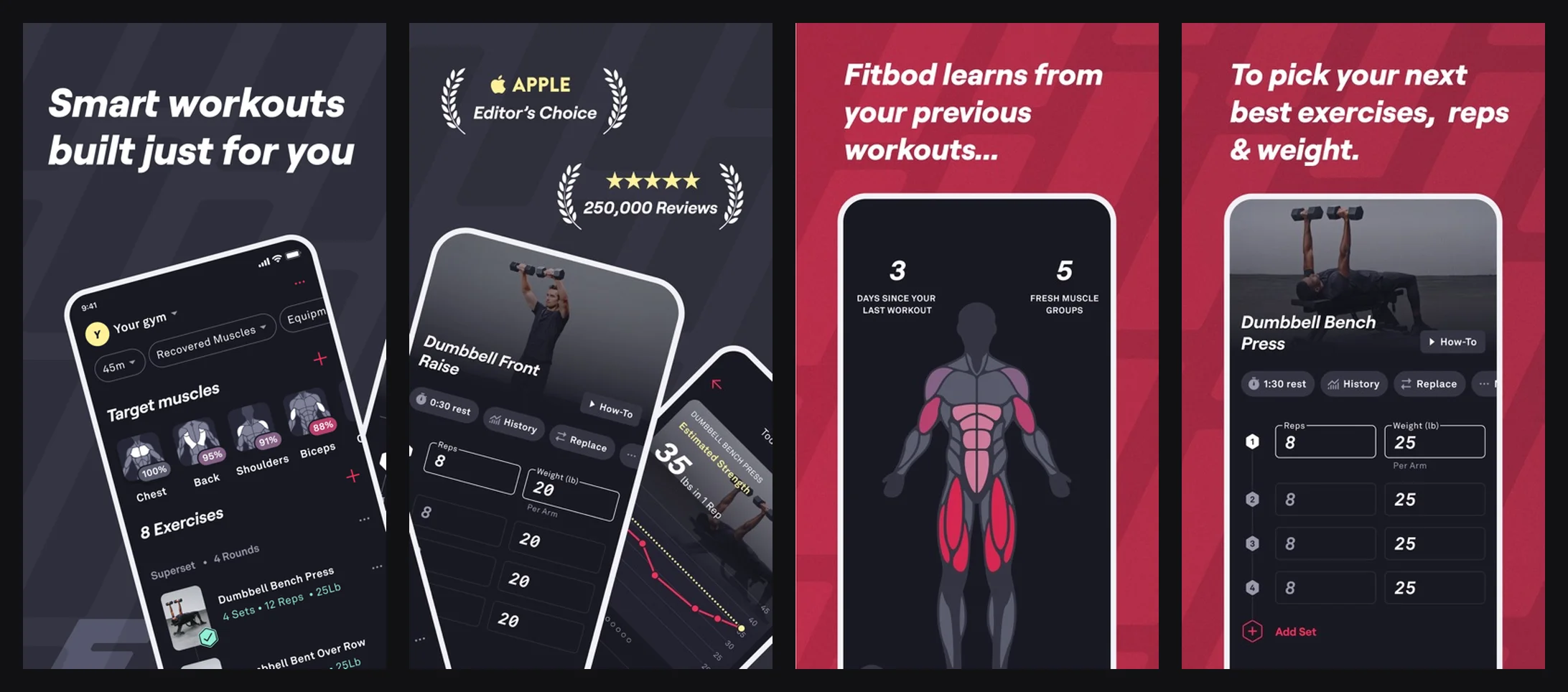
Fitbod is more for the person who wants a workout proposal without programming everything beforehand. This helps when time, equipment, or inspiration is limited. A suggestion can turn a vague intention, such as training lower body, into a structured session.
This convenience requires a trade-off: keep a critical eye. An app cannot directly perceive your technique, a new pain, or the real quality of your sleep. Always adjust exercises, load, and volume when the day’s context calls for it.
3. Atlo: connecting the three inputs that matter
Best for: training, nutrition, and recovery | Price: 7-day free trial, then €8.99/month | Rating: ★★★★☆
Atlo does not replace in-person form correction, but connects training, nutrition, and recovery in one dashboard. Its AI coach can generate programs from a goal, target muscles, and equipment. Training tracking includes sets, reps, load, RIR, and volume by muscle group.
Atlo also tracks sleep, HRV, and resting heart rate through Apple HealthKit on iOS and Health Connect on Android. The app is pre-launch and does not yet offer data export.
⚖️ Comparison: Which One Answers Your Need?
The best choice depends on the decision you want to delegate. This table separates tracking, workout proposals, and a broader view.
| Criterion | Hevy | Fitbod | Atlo |
|---|---|---|---|
| Main use | Workout log | Workout proposals | Training, nutrition, recovery |
| Set logging | Yes | Yes | Yes, with RIR and volume analysis |
| Nutrition | Separate use | Separate use | Food tracking and meal plans |
| Recovery | Requires another tool | Requires another tool | Sleep, HRV, and recovery score |
🔬 How We Compared Them
Our method compares products, not marketing promises. We examined workout preparation, in-session logging, progress indicators, the room left for user judgment, and each app’s scope. We also consulted workoutlab.app and aivancepro.fr on October 28, 2026.
Prices, trials, and availability change by country and store, so verify them before purchase. No app replaces medical assessment or qualified coaching for pain, injury, or a return after a break.
🎯 Which Profile Should Choose What?
Choose Hevy if you already choose exercises and volume, and mainly want a reliable memory of workouts. It fits following a stable plan and comparing reps or loads week to week.
Choose Fitbod if you regularly get stuck deciding what to do. A workout proposal reduces starting friction, but should remain a starting point rather than an automatic command.
Choose Atlo if your question goes beyond the gym: should a workout change because sleep, nutrition, or recovery changed? Do not choose it for live form correction, because that feature is not offered.
📚 Sources and references
These sources were used to verify product positioning and frame this comparison’s limits. Verify commercial terms in your local store.
🔗 Atlo Resources
Continue with practical resources to structure your training.
❓ FAQ
📖 Read next
Track Decisions, Not Just Sets
Join the Atlo waitlist to connect training, nutrition, and recovery.
lockNo spam. We'll email you at launch.