Freeletics vs Fitbod: Which App Should You Choose in 2026?
Freeletics or Fitbod: compare bodyweight training, strength work, progression, and tracking to choose for your routine.
Summarize this article with
The essentials in 30 seconds
Freeletics prioritizes guided, intense workouts, often bodyweight-based. Fitbod is more relevant when you want to structure strength sessions around your equipment and sets.
- 1.Choose Fitbod if you train with weights and want structure for exercises, sets, and recovery. Check that its suggestions match your level and equipment.
- 2.Choose Freeletics if you enjoy intensity and bodyweight training. It is better suited to people ready for sustained effort.
- 3.Our verdict: Freeletics wins for simple guided workouts, Fitbod for a more organized strength practice. Neither choice is universal.
- 4.Atlo serves a different use case: connecting training, nutrition, and recovery in one dashboard. The free trial lasts 7 days, then Pro costs €8.99/month.
Interactive Quiz
Freeletics, Fitbod, or a holistic approach?
Answer 6 quick questions to clarify your priority.
What is your current level?
🧭 Freeletics or Fitbod: The Short Answer
Freeletics is the better starting point when you want to launch a guided workout with little preparation, while Fitbod suits a more structured strength practice. The right choice depends on your environment, experience with weights, and the decisions you want an app to support.
The discussion published on forum.freeletics.com highlights a useful question before any subscription: an app that looks suitable on paper must also fit your real routine. Start with a manageable session, then observe recovery before increasing difficulty.
🔬 How We Compared Freeletics and Fitbod
We evaluated both approaches through workout format, required equipment, the role of set tracking, progression, recovery, and clarity of public information. Information was consulted in October 2026. Offers and features can change, so always check terms in each app.
Our framework does not seek an absolute winner. The detailed comparison at herdailyfit.com also underlines that needs change with age, level, and access to equipment. A highly guided workout can help someone begin, while an experienced lifter may prefer more control over exercises.
💪 The Three Approaches in Detail
Freeletics and Fitbod can both be useful, but they organize training differently. Atlo occupies a third space: putting training in context with nutrition and recovery data.
1. Freeletics: for guided, intense workouts
Best for: motivated athletes, bodyweight, intensity | Watch-out: pace progression carefully
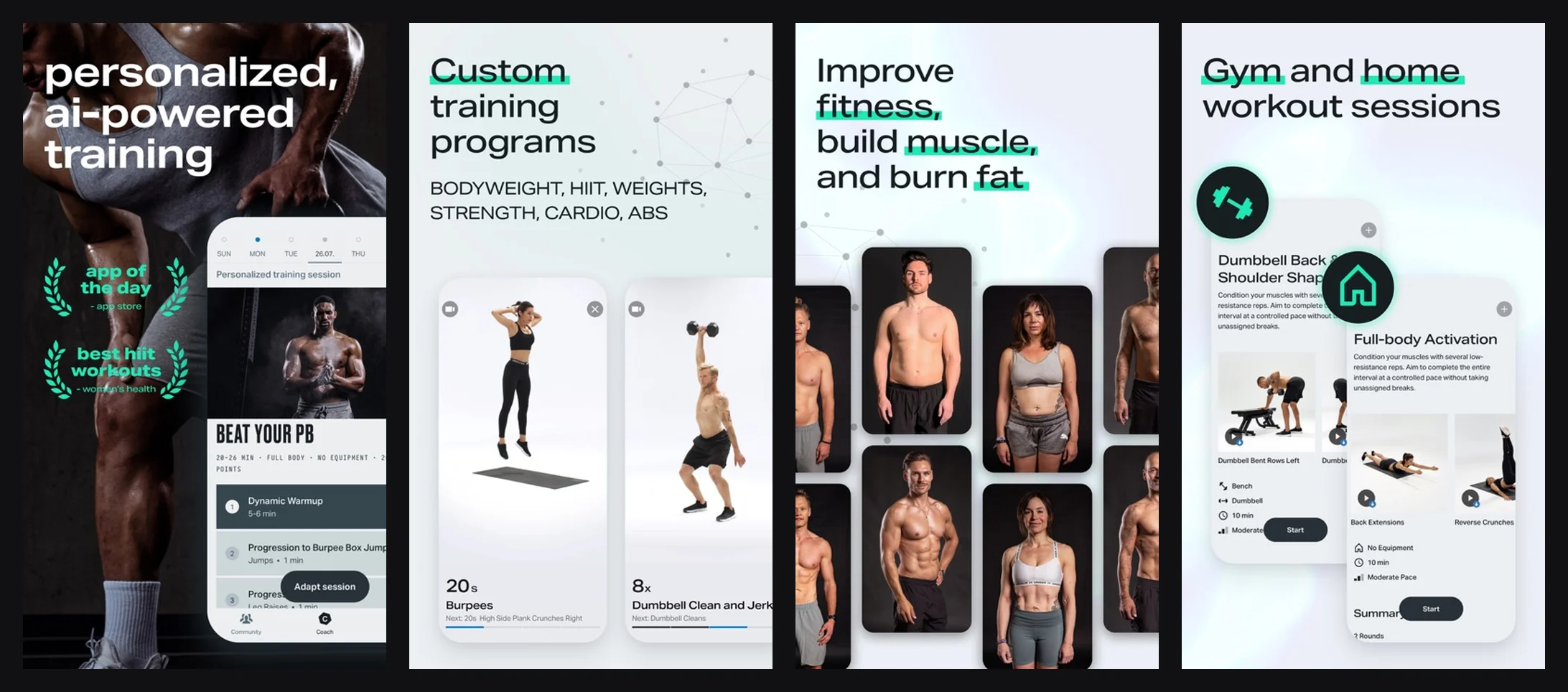
Freeletics makes sense if you want a structured workout that limits planning time. Feedback on forum.freeletics.com also shows that returning too quickly can make the first workout hard. Reduce volume or difficulty if recovery does not keep up.
2. Fitbod: for structuring a strength practice
Best for: dumbbells, machines, sets | Watch-out: stay critical of suggestions
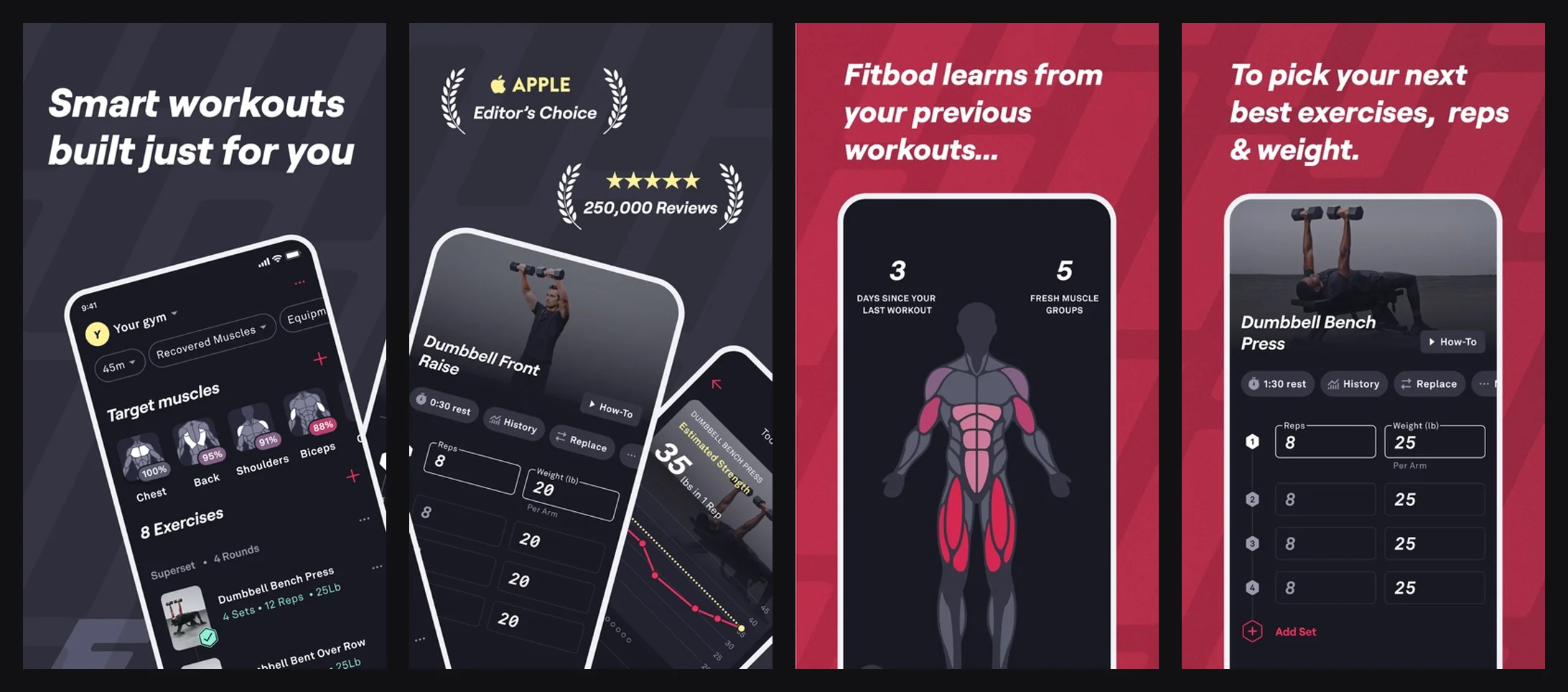
Fitbod is more relevant when your sessions rely on strength exercises, sets, and weights. Its value is providing structure, not replacing your judgement about technique, pain, or unusual fatigue. The comparison at herdailyfit.com is useful additional reading, but progression must remain adapted to your own signals.
3. Atlo: for connecting training decisions to the rest
Best for: athletes connecting their data | Price: 7-day trial, then €8.99/month | Rating: ★★★★☆
Atlo is not a replacement for a coach physically present in the gym. Its difference is a multi-agent AI coach that can connect training, nutrition, and recovery, with explained recommendations and personalized programs generated from goals, target muscles, and equipment.
Atlo is pre-launch on iOS. Access starts with a waitlist, with a 7-day free trial then Pro at €8.99/month. It does not offer real-time form correction, an area where a human coach remains stronger.
⚖️ Comparison: Which Profile Fits Each App?
The decisive criterion is not the number of available workouts but the likelihood that you will follow the program. Use this table as direction, not as a promise of results.
| Criteria | Freeletics | Fitbod | Atlo |
|---|---|---|---|
| Ready-to-start workout | ★★★★★ | ★★★☆☆ | ★★★☆☆ |
| Set organization | ★★☆☆☆ | ★★★★★ | ★★★★☆ |
| Bodyweight training | ★★★★★ | ★★★☆☆ | ★★★☆☆ |
| Nutrition and recovery | ★☆☆☆☆ | ★★☆☆☆ | ★★★★★ |
🎯 Which Tool Should You Choose for Your Situation?
Choose Fitbod if your progress relies mainly on strength work, weights, and organizing exercises. Keep room for judgement: an automated suggestion does not always know your technique or how you feel that day.
Choose Freeletics if you are already self-directed and intensity helps you stay consistent. Its official forum also shows the need to reduce volume or difficulty when returning.
Choose Atlo if you want to understand how sleep, nutrition, and training load interact. This approach does not replace medical expertise or a coach’s eye on your technique.
📚 Sources and References
The sources below help verify features and deepen your choice. Always consult current terms and pricing before subscribing.
🔗 Atlo Resources
Go deeper with these Atlo guides and tools.
❓ FAQ
📖 Read next
Connect training, nutrition, and recovery
Join the Atlo waitlist to discover an AI coach that explains its recommendations.
lockNo spam. We'll email you at launch.