adidas Running App: Complete Guide, Features, and Review
Everything you need to know about the adidas Running app (formerly Runtastic): GPS tracking, free vs Premium features, watch sync, and top alternatives.
Summarize this article with
The essentials in 30 seconds
The adidas Running app remains one of the most widely used GPS tracking tools for runners and walkers.
- 1.Formerly known as Runtastic, the app was acquired by adidas in 2015 before being fully integrated into its global athletic ecosystem.
- 2.The free tier delivers core GPS tracking, covering distance, pace, estimated calories, elevation gain, and shoe mileage tracking.
- 3.The Premium membership (€9.99/month or €49.99/year) unlocks personalized training plans (from 5K to marathon), advanced interval workouts, and live cheering.
- 4.To maximize endurance gains without injury risks, pairing your running sessions with holistic nutrition and recovery tracking via Atlo is a powerful game changer.
Interactive Quiz
What is your connected running profile?
Answer 6 quick questions to assess your tracking and training needs
How often do you run each week?
📖 What is the adidas Running App (formerly Runtastic)?
The adidas Running app stands as one of the true pioneers of smartphone fitness tracking. Founded in Austria in 2009 under the Runtastic brand name, the platform rapidly attracted tens of millions of running enthusiasts thanks to its reliable GPS accuracy and straightforward interface.
In 2015, German sports giant adidas acquired Runtastic for 220 million euros to build its digital health ecosystem. The app was later rebranded to 'adidas Running: Run tracker', preserving its battle-tested core technology and broad compatibility with leading smartwatches.
Today, the application boasts over 50 million downloads on Google Play and an average rating of 4.8 out of 5 on Apple's App Store, cementing its position as a global standard for runners of all experience levels.
🎯 Core Features for Running, Walking, and Cardio
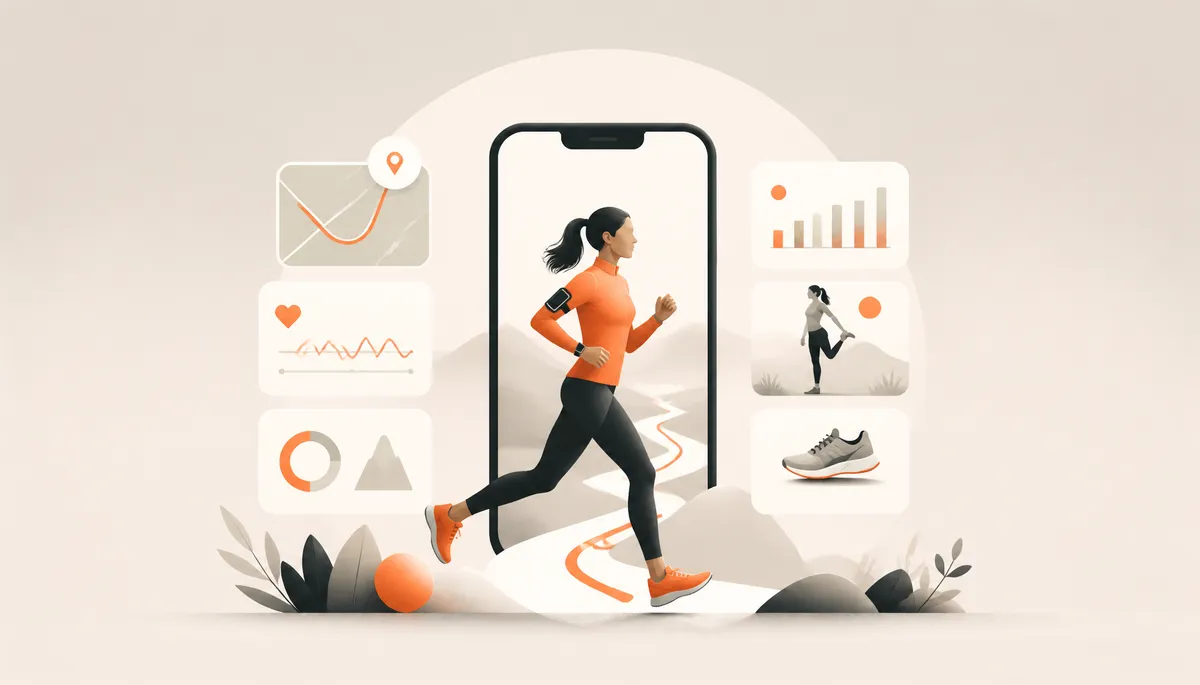
Live GPS tracking serves as the core engine of the application. As soon as you hit start, adidas Running records your route, total distance, instant speed, average pace (min/km or min/mile), and elevation profile with remarkable consistency.
The built-in audio coach delivers vital feedback without forcing you to glance at your screen. Every kilometer, mile, or custom interval, voice prompts announce your elapsed time, split pace, and calories burned, keeping your stride fluid and uninterrupted.
The Shoe Tracker keeps a precise eye on running shoe wear and tear. By assigning each session to a specific pair of shoes in the app, you track accumulated mileage and receive reminders when it is time for a replacement (typically between 600 and 800 km) to safeguard your joints.
Integration with the adiClub membership converts every kilometer into rewards. Members earn loyalty points for every logged workout, unlocking gear discounts, early product drops, and access to exclusive athletic events.
💡 Practical battery optimization tip
⌚ Smartwatch Compatibility, Sensors, and Health Sync
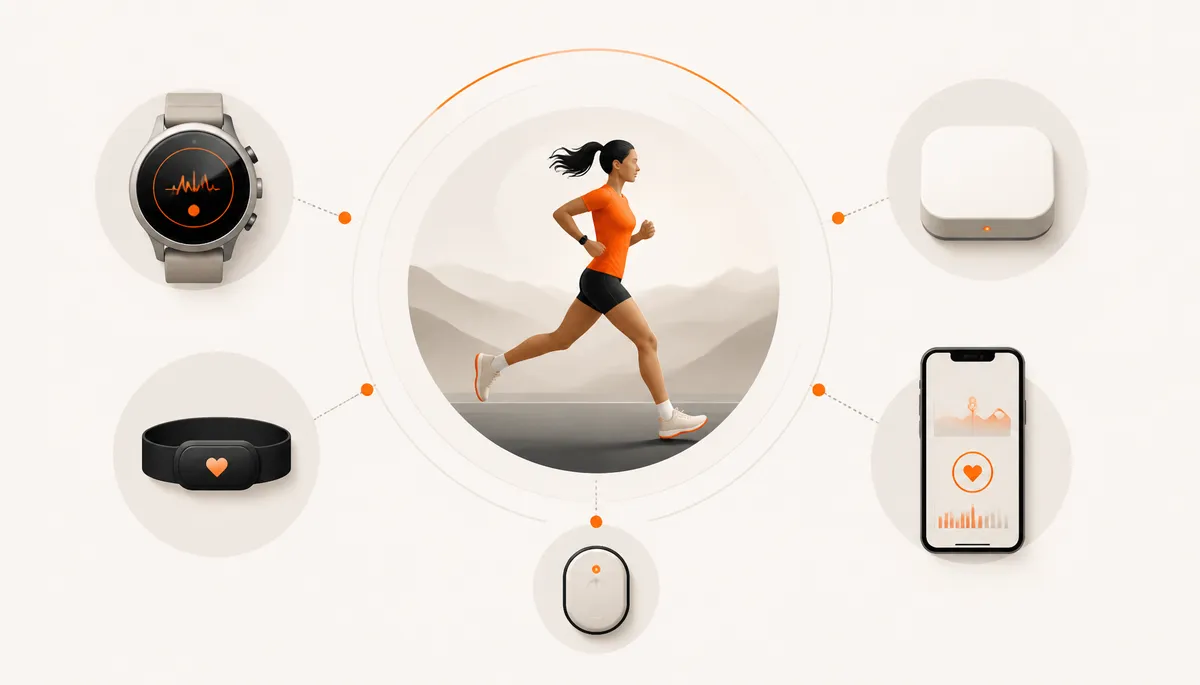
The adidas Running platform offers wide hardware ecosystem support. Whether you run with a mainstream smartwatch or a high-end sports timepiece, automated sync bridges keep your activities organized in one central place.
A standalone native app is available on Apple Watch and Wear OS. This allows you to leave your smartphone at home: the watch captures GPS routes, wrist-based heart rate, and cadence, automatically uploading the workout upon reconnecting.
Direct synchronisation with Garmin Connect, Polar Flow, and Suunto runs seamlessly. Once your accounts are linked, any run logged on your dedicated sports watch automatically syncs into adidas Running to award adiClub points and update your logs.
Bridges with Apple Health (HealthKit) and Google Health Connect ensure universal interoperability. Active calories, daily step totals, and running workouts can easily be shared with comprehensive analytical platforms.
⚖️ adidas Running vs Competitors: Strava and Nike Run Club
In the competitive landscape of running applications, three major players command the largest share of downloads: adidas Running, Strava, and Nike Run Club (NRC). Each fulfills a distinct athletic philosophy.
Strava positions itself as the undisputed social network for athletes. Its major strengths include timed segments, competitive local leaderboards, and broad sensor support, though its subscription is pricier (around €11.99/month).
Nike Run Club focuses on a 100% free model featuring high-quality guided runs. All training plans and audio coaching sessions from elite athletes are accessible without paying, but the app lacks deeper analytical tools and shoe wear tracking.
adidas Running delivers an attractive balance between technical reliability and motivation. Its clean interface, accurate voice coaching, and rewarding loyalty perks make it an ideal choice for runners who want solid tracking without the social pressure of Strava.
| Criteria | adidas Running | Strava | Nike Run Club |
|---|---|---|---|
| Pricing model | Freemium (€9.99/mo) | Freemium (€11.99/mo) | 100% Free |
| GPS accuracy & interface | ★★★★★ Excellent | ★★★★★ Excellent | ★★★★☆ Good |
| Social features & segments | ★★★☆☆ Basic | ★★★★★ Global leader | ★★☆☆☆ Limited |
| Shoe mileage tracking | ★★★★★ Yes (Shoe Tracker) | ★★★★☆ Via web profile | ☆☆☆☆☆ No |
| Audio guided runs | ★★★★☆ Customizable coach | ★★☆☆☆ Basic | ★★★★★ Elite coaches |
📈 Beyond GPS Tracking: Nutrition, Strength, and Recovery
Logging miles alone is not enough to achieve sustainable running progression. Many runners hit a plateau or suffer overuse injuries (shin splints, Achilles tendinopathy, IT band friction) because they overlook the physiological pillars surrounding their runs.
Adequate caloric intake and balanced macronutrients directly fuel endurance. Chronic carbohydrate deficits or inadequate hydration impair muscle glycogen replenishment, resulting in sudden energy crashes and persistent fatigue.
Targeted strength training reinforces posture and boosts running economy. Strengthening glutes, hamstrings, calves, and core musculature helps absorb ground impacts and maintain a resilient stride throughout late race stages.
Heart Rate Variability (HRV) and deep sleep metrics uncover your true physiological readiness. Knowing when to ease off or swap a demanding interval session for an active recovery jog is essential to avoid overtraining.
 Complementing adidas Running with Atlo AI Coach
Atlo syncs directly with Apple Health and Health Connect to leverage your adidas Running sessions. Rather than letting running data sit isolated in a GPS silo, Atlo's multi-agent system automatically correlates running volume with nutrition, strength work, and sleep.
The AI Coach dynamically adjusts your nutritional targets and strength sessions. When you log a strenuous 15-kilometer run, Atlo recalibrates your total energy expenditure (Kalman filter-based TDEE), recommends optimal carbohydrate and protein reloads, and moderates lower-body lifting volume for the following day.
With a library of over 400 guided exercises and in-depth HRV recovery tracking, Atlo delivers a 360-degree view of your athletic conditioning. The platform is available with a 7-day free trial, followed by a transparent Pro plan at €8.99 per month (or €69.99 per year).
📚 Scientific Sources and References
This guide is grounded in official running app specifications and exercise physiology research:
- •adidas Running (ex-Runtastic), Documentation officielle et fonctionnalités
- •Google Play Store, Fiche technique adidas Running: Run tracker (2026)
- •Apple App Store, Spécifications et avis adidas Running
- •Seiler S. (2010), What is Best Practice for Training Characteristics in Endurance Athletes? International Journal of Sports Physiology and Performance
- •Burke L.M. et al. (2011), Carbohydrates for training and competition. Journal of Sports Sciences
🔗 Recommended Atlo Resources
Continue your athletic progression with our in-depth guides and free interactive tools:
Running Program: Structure Your Workouts and Progress
Core principles to construct a balanced training schedule combining intervals, endurance, and recovery.
Sports Recovery: Essential Protocols and Key Metrics
Optimize sleep, HRV, and post-workout strategies to consistently eliminate fatigue.
Atlo TDEE & Energy Expenditure Calculator
Accurately estimate your daily caloric expenditure based on your sports activity volume.
❓ FAQ
📖 Read next
Running Program: Complete Training Guide
Sports Recovery: Optimizing Sleep and HRV
Cardio Program: Endurance and Cardiovascular Health
Take Your Running Progression to the Next Level with Atlo
Combine your running sessions with intelligent tracking across nutrition, targeted strength training, and daily physiological recovery.
lockNo spam. We'll email you at launch.