Strava vs Komoot: Which App Should You Choose to Ride and Explore?
Strava or Komoot? A clear comparison of performance analysis, community, and route planning.
Summarize this article with
The essentials in 30 seconds
Strava and Komoot overlap on tracking and routes, but their priorities differ. Strava is mainly for recording, analysing, and sharing an activity. Komoot is first a tool for planning and then following a ride on a specific route.
- 1.Choose Strava for performance and community. Its activities, segments, and social interactions fit people who want to track progress and connect with riding partners.
- 2.Choose Komoot to plan an adventure. Its value lies in route choice, terrain type, and navigation, especially for gravel, bike touring, and hiking.
- 3.There is no universal winner. BikeRadar aptly describes two distinct priorities: Strava leans more toward performance, while Komoot focuses on the outing experience and route preparation.
- 4.Our verdict: start with Komoot if you do not know where to ride. Keep Strava if data, segments, and community motivate you to come back every week.
Interactive Quiz
Which App Fits Your Rides?
Answer 6 quick questions to clarify what matters most to you.
What do you do before a ride?
📖 Strava or Komoot: The Quick Answer
Strava is the better choice when a ride becomes data to analyse and share. The app records an activity, keeps its history, and creates a community dynamic around segments, follows, and interactions.
Komoot is the better choice when the route itself is part of the goal. Planning a track, understanding its terrain, and receiving guidance during the outing matter more than comparing an effort with other people.
That distinction matches the analysis published by BikeRadar: Strava prioritises performance while Komoot prioritises the outing experience. It helps avoid the wrong question. The aim is not to find an objectively superior app, but the one that removes the most friction from your practice.
🆚 The Two Apps in Detail
We compared both services across the full user journey: preparation, the outing, data review, and cost of use. The screenshots below come from official App Store listings, not marketing mock-ups.
1. Strava: Data, Segments, and Community
Best for: analysing and sharing activities | Strength: segments and sports community | Rating: ★★★★★
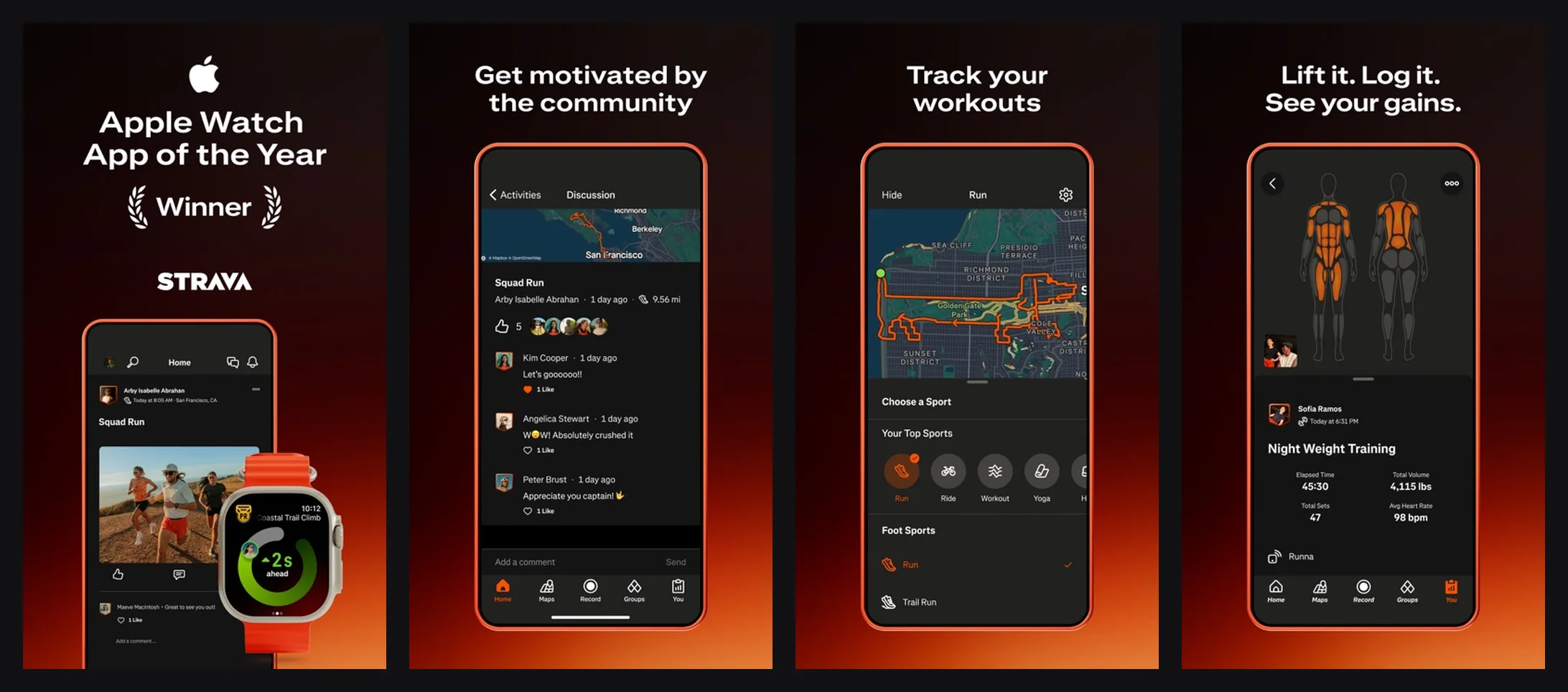
Strava turns an outing into a performance history. The platform lets users record activities, import data from a cycling computer or watch, track distance and speed, and then share them. Its segments provide a concrete reason to revisit a route, while its social feed supports interaction among athletes.
The trade-off is simple: Strava is particularly useful after the ride and for comparing progress. If your need begins with the question, ‘where can I ride today?’, its planning approach may be less central than Komoot's.
2. Komoot: Routes and Terrain-Focused Navigation
Best for: exploring, planning, and navigation | Strength: route and terrain context | Rating: ★★★★★
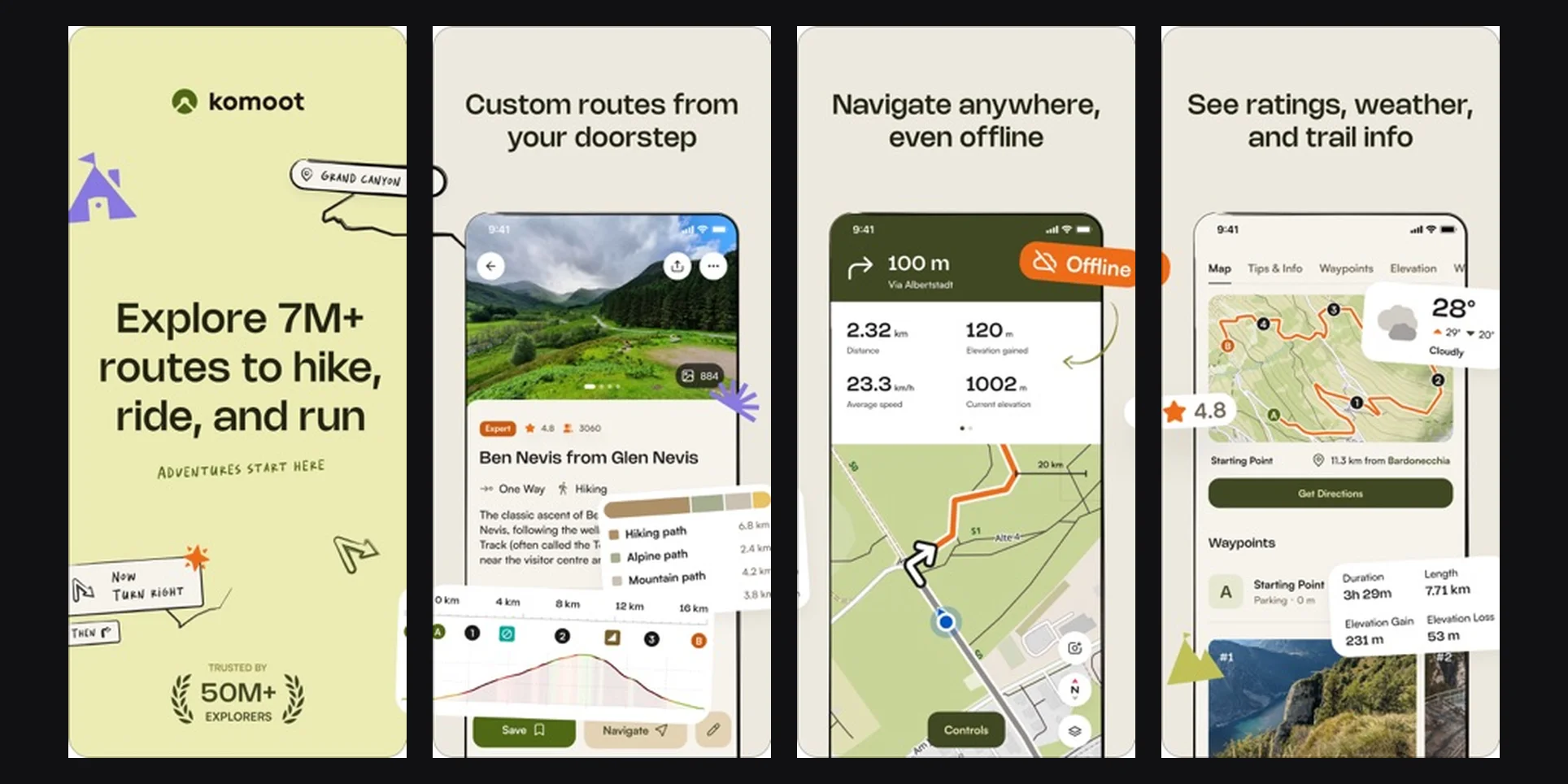
Komoot puts the route before the dashboard. Its value is building an outing around a destination, terrain type, and navigation. It is a natural choice when planning a gravel loop, bike trip, hike, or ride in an unfamiliar area.
Komoot can also record an outing, but the experience is less focused on social competition. That is a strength if you want to ride without comparison. It is a limitation if segments, leaderboards, and community give you momentum.
3. Atlo: Connecting Training to the Rest of the Week
Best for: a holistic view of training, nutrition, and recovery | Price: 7-day free trial, then €8.99/month | Rating: ★★★★☆
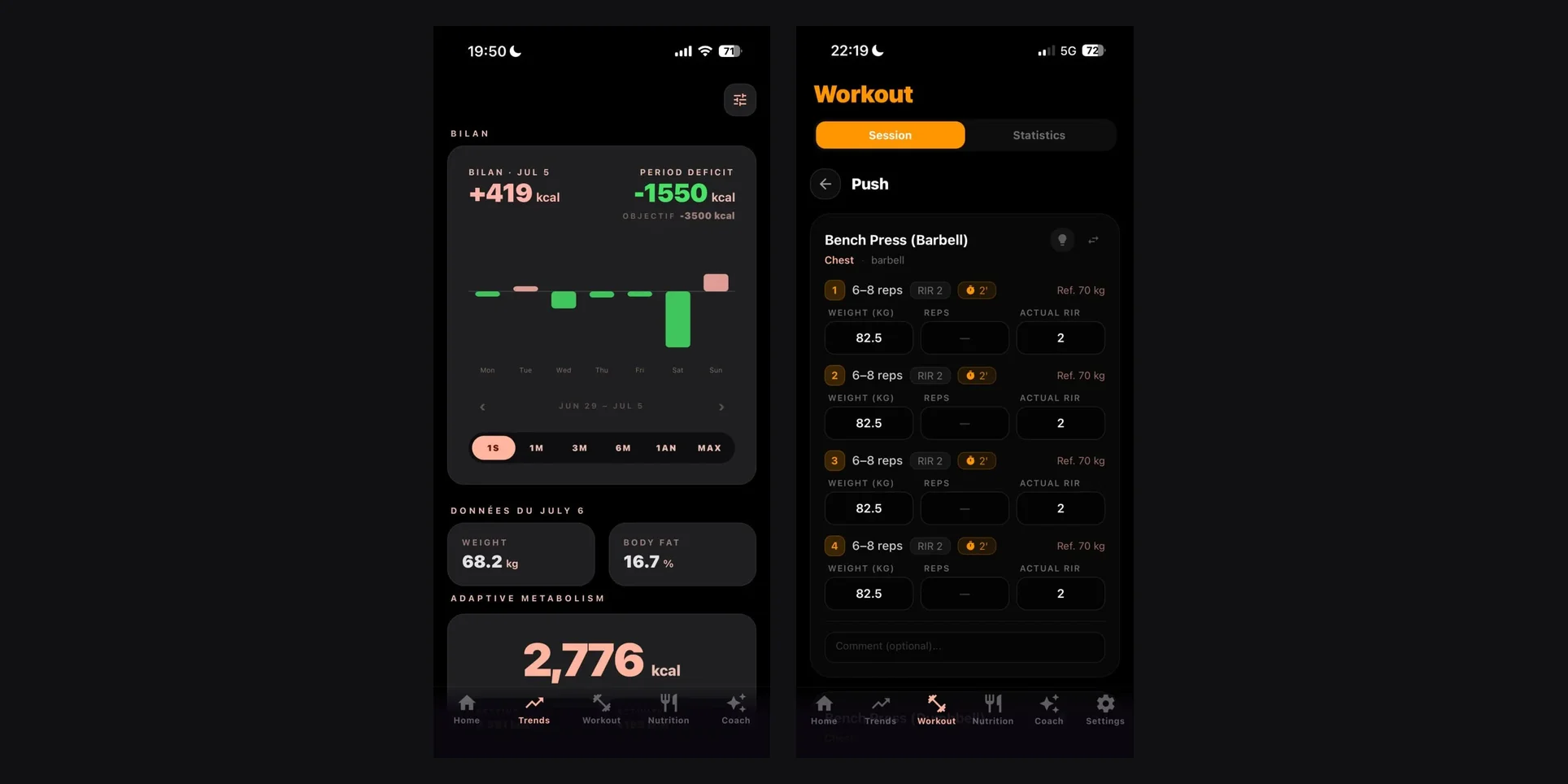
Atlo is not trying to replicate a community map or route engine. The platform brings training tracking, nutrition, and recovery into a single dashboard. Its AI coach can cross-reference goals, training history, preferences, and available health data to explain its recommendations.
Atlo is pre-launch, so it is not the fit for someone who only wants to navigate a trail right now. It becomes relevant when the question goes beyond the track: how to organise training, sleep, nutrition, and progression over several weeks. 7-day free trial, then €8.99/month.
⚖️ Strava vs Komoot Comparison
This table does not name an overall winner: it shows which tool is more coherent for a given task. Ratings reflect product positioning, not a universal measure of quality.
| Criteria | Strava | Komoot | Atlo |
|---|---|---|---|
| Record an activity | ★★★★★ | ★★★★☆ | ★★★★☆ |
| Plan a route | ★★★☆☆ | ★★★★★ | ★★☆☆☆ |
| Navigation during the outing | ★★★☆☆ | ★★★★★ | ★★☆☆☆ |
| Segments and comparison | ★★★★★ | ★★☆☆☆ | ★☆☆☆☆ |
| Sports community | ★★★★★ | ★★★☆☆ | ★★☆☆☆ |
| Nutrition and recovery | ☆☆☆☆☆ | ☆☆☆☆☆ | ★★★★★ |
🔬 How We Compared
Our comparison focuses on real use, not a list of promises. We evaluated product listings, preparation and recording flows, and the apps' public screens. Criteria were selected to answer three distinct needs: finding a route, measuring an outing, and organising progression.
1. Preparation. We looked at the ease of imagining a route, understanding terrain, and preparing an outing beyond familiar habits.
2. During the outing. We separated navigation, activity recording, and the constraints of using a phone or connected device.
3. After the outing. We compared data review, community sharing, and the ability to see change over time.
4. Explicit limitations. A navigation tool does not replace a human coach in the field. Conversely, a holistic platform does not replace the map depth and specialised community of these two apps.
🎯 Which Tool Should You Choose?
The right choice depends on when the app needs to help you. Before the outing, Komoot is often most useful. After the outing, Strava has the advantage. Between sessions, Atlo targets a different question: connecting training, nutrition, and recovery.
Choose Strava If You Want to Measure and Share
You like revisiting rides, comparing efforts on a segment, following a history, and seeing your sports circle's activity. Strava keeps the edge for social motivation and performance-centred analysis.
Choose Komoot If You Want to Explore Without Improvising
You are planning a ride on unfamiliar paths, a cycling weekend, or a gravel loop. Komoot is the better first choice because planning and navigation are central to it. It is also the calmer choice if you prefer an outing experienced over an outing ranked.
Who Should NOT Choose Atlo?
Atlo should not be chosen to replace a dedicated mapping app or to find public segments. Its role is different: tracking training, nutrition, and recovery in one view, with an AI coach that explains its recommendations. If your only need is navigation or publishing a ride, Komoot or Strava is more direct.
⭐ Our Verdict
📚 Sources and References
These references support the product positioning and criteria used in this comparison. Offers, pricing, and availability can change by country and store.
🔗 Atlo Resources
Continue with these resources to organise training and recovery.
❓ FAQ
📖 Read next
Connect Your Sessions to the Rest of Your Progress
Atlo brings training, nutrition, and recovery together to help you understand your data, with an AI coach that explains its recommendations.
lockNo spam. We'll email you at launch.