MyFitnessPal vs Cronometer: Which Nutrition Tracker Should You Choose in 2026?
We compared MyFitnessPal and Cronometer on database size, micronutrient depth, price, and features. Here's which tracker fits your goals.
Summarize this article with
The essentials in 30 seconds
MyFitnessPal has the world's largest food database, Cronometer is unbeatable on micronutrient precision. But in 2026, neither automatically cross-references nutrition, training, and recovery.
- 1.MyFitnessPal (€79.99/year) dominates on volume: 19 million foods, dozens of fitness integrations, and an active community. But its free plan has become very limited and its database is polluted by user entries.
- 2.Cronometer (Gold at $59.99/year) wins on precision: 80+ tracked micronutrients, a verified database (NCCDB, USDA), and a surprisingly complete free version.
- 3.Neither automatically cross-references nutrition + training + recovery. That's the problem Atlo solves with its multi-agent AI coach, but at a higher price (€8.99/month).
- 4.Our verdict: Cronometer for nutritional precision, MyFitnessPal for the largest database. Atlo if you want an AI to cross-reference your 3 pillars and give you a complete plan.
Interactive Quiz
Which nutrition tracker is right for you?
Answer 6 quick questions to find the best tool for your goals.
What's your main goal?
📖 Why Compare MyFitnessPal and Cronometer?
MyFitnessPal and Cronometer are the two references in nutrition tracking, but for opposite reasons. MyFitnessPal wins on the size of its database and its community, Cronometer on the scientific precision of its data and the depth of its micronutrient tracking. Choosing between them means choosing between quantity and quality.
This comparison came from a simple question: which one to choose when you want to track your nutrition seriously, whether to lose weight, build muscle, or improve performance? We tested both apps, analyzed their databases, pricing, and limitations. Here's what we found.
📱 The apps in detail
We tested MyFitnessPal and Cronometer for several weeks. Here's what we observed, with screenshots to back it up.
1. MyFitnessPal: the food database giant
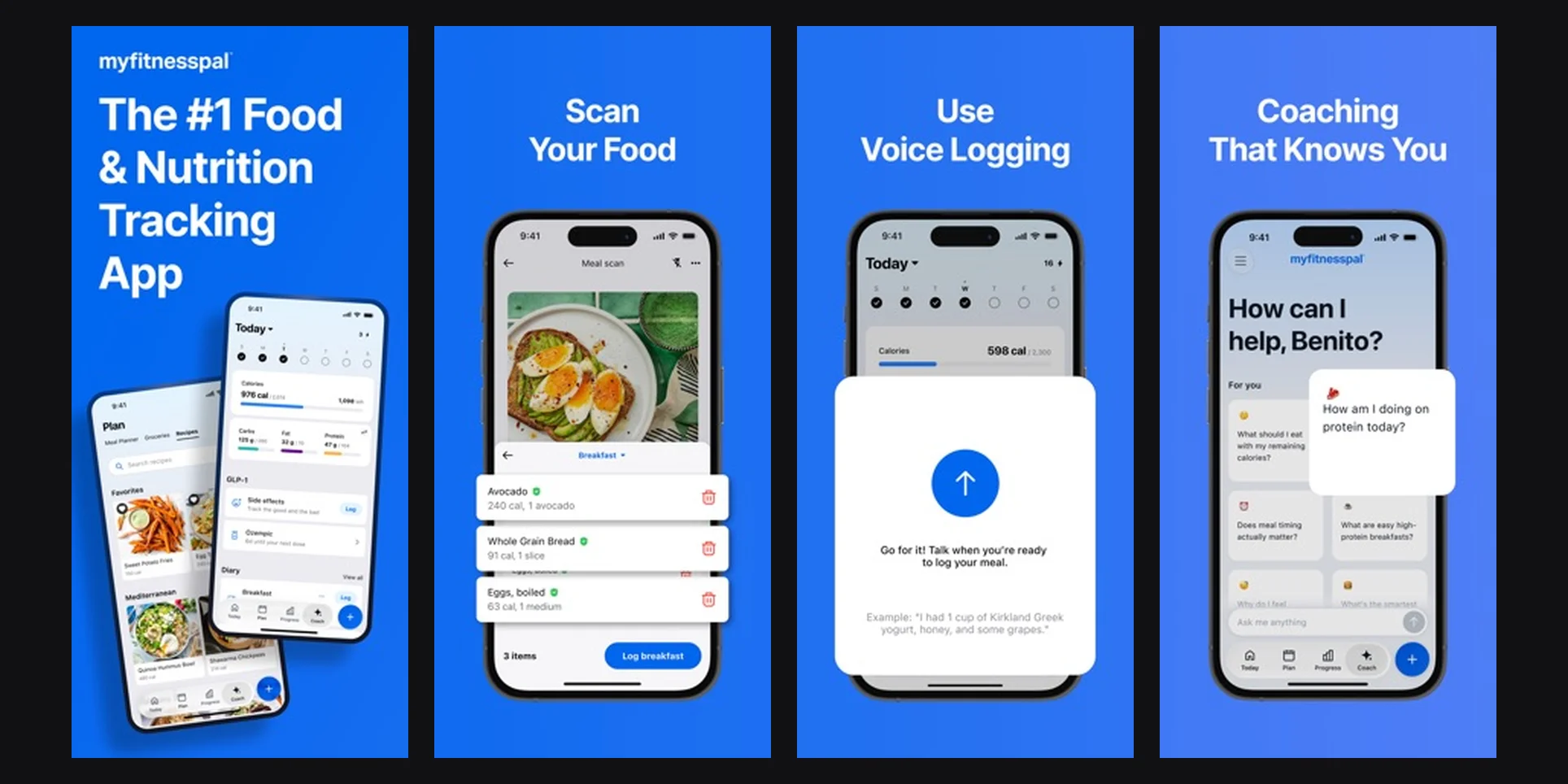
MyFitnessPal remains the most downloaded tracker in the world, with a database of nearly 19 million foods. Launched in 2005, it built its reputation on the richness of its database, fed by decades of user contributions. The app covers both American products and French supermarkets.
2. Cronometer: the micronutrient specialist
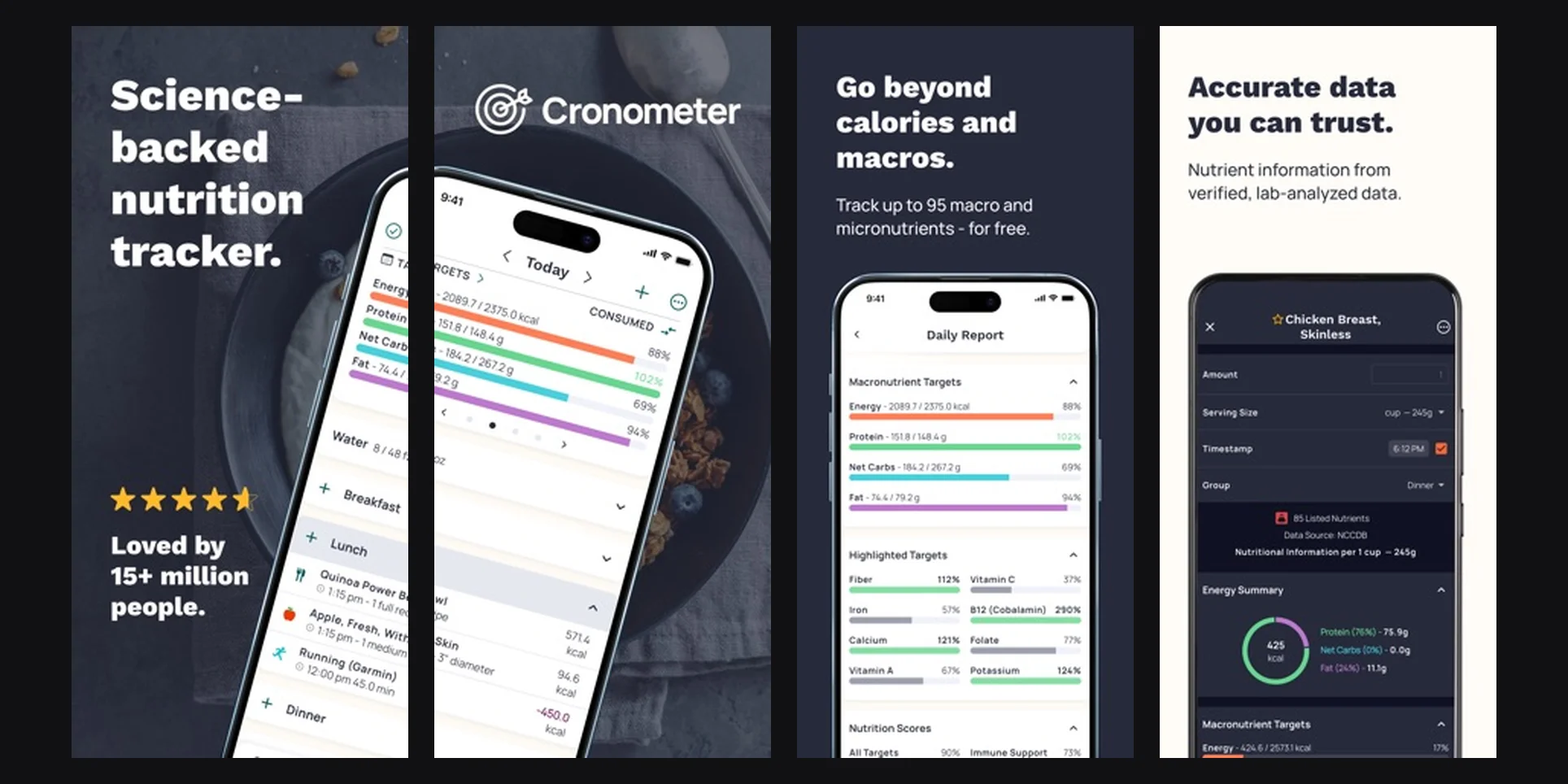
Cronometer is the reference tool for those who want to track micronutrients with precision. Launched in 2011, it stands out for a verified database (NCCDB, USDA) rather than user entries, and for tracking over 80 vitamins and minerals, where most trackers stop at macros.
💪 MyFitnessPal: The Food Database Giant
MyFitnessPal (MFP) remains the most widely used calorie tracker in the world. Since 2005, the app has built its dominance on a crowdsourced database that became the largest on the market, and on an ecosystem of integrations covering almost every fitness device.
What MyFitnessPal Does Well
Best for: food database, fitness integrations, community | Price: €79.99/year (Premium) | Rating: ★★★★☆
The food database is exceptional. Nearly 19 million foods, including the vast majority of French supermarket products (Carrefour, Leclerc, Auchan) and restaurant dishes. The barcode scanner is fast and reliable.
Fitness integrations are the broadest on the market. MFP connects to Garmin, Fitbit, Apple Health, Strava, and dozens of other apps to automatically import your burned calories and activity.
The community is active. Forums, shared recipes, goal-based groups: the social aspect is a real motivation boost over the long term.
What Frustrates About MyFitnessPal
The free plan has become skeletal. Since 2022, MFP has removed the barcode scanner (now Premium), custom macros, and per-meal display from the free tier. The free app is now a basic tracker with ads.
The price is high: €79.99/year (Premium). It's one of the most expensive trackers on the market, ahead of Cronometer Gold ($59.99/year) and Yazio (€29.99/year). For this price, the interface has barely evolved since 2015.
The database is polluted by incorrect user entries. Anyone can add a food, and many duplicates or errors linger in the database. Verifying macronutrients becomes a chore, especially compared to Cronometer's verified database.
Micronutrient tracking is limited. MFP focuses on calories and macros but only tracks a handful of vitamins and minerals. For complete nutritional tracking, Cronometer is far ahead.
🔬 Cronometer: The Micronutrient Specialist
Cronometer is a Canadian app launched in 2011 that made scientific precision its main selling point. Where MyFitnessPal bets on quantity, Cronometer bets on data quality and the depth of nutritional tracking.
What Cronometer Does Better
Best for: micronutrients, data accuracy, free version | Price: $59.99/year (Gold) | Rating: ★★★★☆
Micronutrient tracking is the best on the market. Cronometer tracks over 80 vitamins, minerals, and nutrients (zinc, magnesium, B vitamins, omega-3, etc.), where MyFitnessPal stops at a few. It's the tool of choice for dietitians and demanding athletes.
The database is verified, not crowdsourced. Cronometer relies on official sources (NCCDB, USDA, Canadian databases) rather than user entries. Result: reliable data, no duplicates or errors, and gram-level precision.
The free version is surprisingly complete. The free plan includes the barcode scanner, full micronutrient tracking, and no ads. Where MyFitnessPal gutted its free tier, Cronometer kept it generous.
Cronometer's Limitations
The database is smaller and very North American. Cronometer has about 1.2 million verified foods, vs 19 million for MFP. Specific French products (regional cheeses, prepared meals) are less well covered.
The interface is utilitarian, sometimes austere. Cronometer prioritizes information density over design. Beginners can feel lost in the micronutrient tables, where MyFitnessPal and Yazio are more welcoming.
Fewer fitness integrations. Cronometer syncs with Apple Health and Google Fit, but not with Strava, Garmin, or Whoop natively. If your sports ecosystem is broad, MFP covers many more devices.
⚖️ Head-to-Head Comparison: The Feature Table
We rated each app on 8 objective criteria to help you choose. Ratings are based on our real testing of both apps (Premium/Gold versions), in August 2026.
| Criteria | MyFitnessPal | Cronometer | Atlo |
|---|---|---|---|
| Food database | ★★★★★ | ★★★☆☆ | ★★★★☆ |
| Micronutrient precision | ★★☆☆☆ | ★★★★★ | ★★★★☆ |
| Free version | ★★☆☆☆ | ★★★★★ | ★☆☆☆☆ |
| Design and interface | ★★★☆☆ | ★★★☆☆ | ★★★★☆ |
| Fitness integrations | ★★★★★ | ★★★☆☆ | ★★★★☆ |
| Value for money | ★★☆☆☆ | ★★★★☆ | ★★★☆☆ |
| Exercise + nutrition cross-referencing | ★★☆☆☆ | ★☆☆☆☆ | ★★★★★ |
| Integrated AI coach | ☆☆☆☆☆ | ☆☆☆☆☆ | ★★★★★ |
💰 Pricing and Subscriptions: The Real Cost in 2026
The price gap is considerable, and free access changes the game. Here are the official prices as of August 2026. Note that Cronometer displays its prices in US dollars.
| MyFitnessPal | Cronometer | Atlo | |
|---|---|---|---|
| Free | Yes (very limited) | Yes (complete) | No (7-day trial) |
| Premium (monthly) | €19.99/month | $10.99/month | €8.99/month |
| Premium (yearly) | €79.99/year | $59.99/year | €69.99/year |
| Free trial | 1 month Premium | No | 7 days |
🔬 How We Compared MyFitnessPal and Cronometer
We tested both apps in real conditions for several weeks. Each app was used daily to track all meals, scan barcodes of French products, and monitor calorie and macronutrient trends.
We evaluated each app on 8 criteria: food database, micronutrient precision, free version, design and user experience, fitness integrations, value for money, exercise and nutrition cross-referencing, and the presence of a coach or intelligent guidance. All prices were verified on official websites in August 2026.
We also included Atlo in the comparison, not as a direct competitor to calorie trackers, but as an alternative for those seeking a more holistic solution that automatically cross-references nutrition, training, and recovery.
 And Where Does Atlo Fit In? The AI Alternative That Changes the Game
3. Atlo: The AI Coach That Cross-References Nutrition, Training, and Recovery
Best for: holistic multi-pillar approach | Price: 7-day free trial, then €8.99/month | Rating: ★★★★★
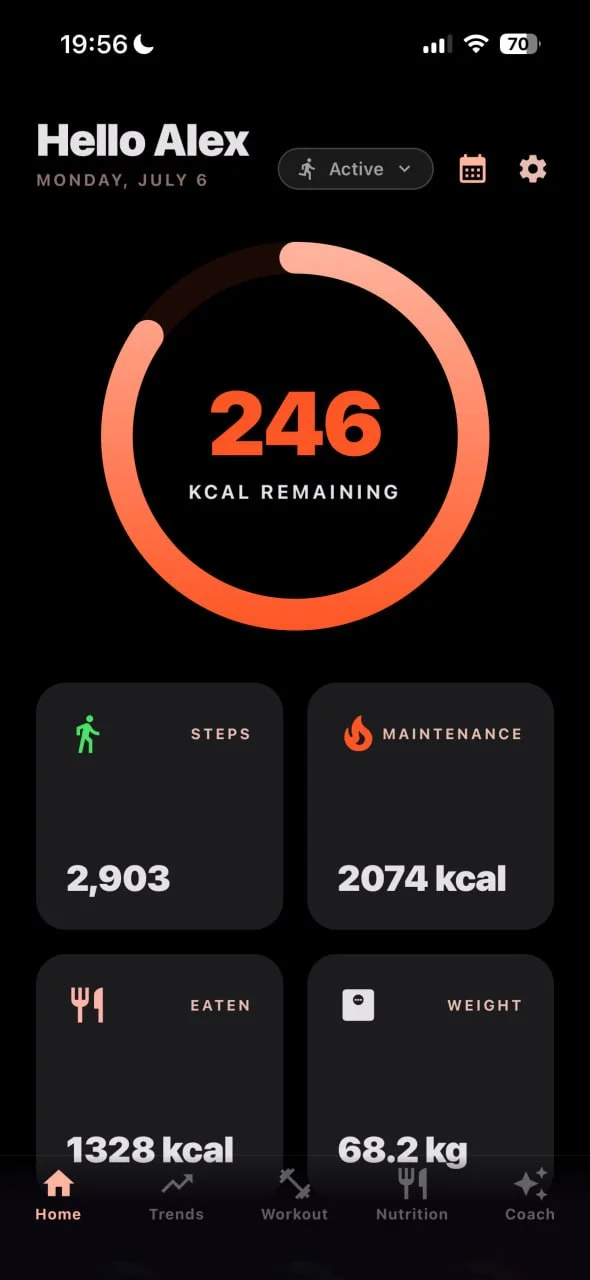
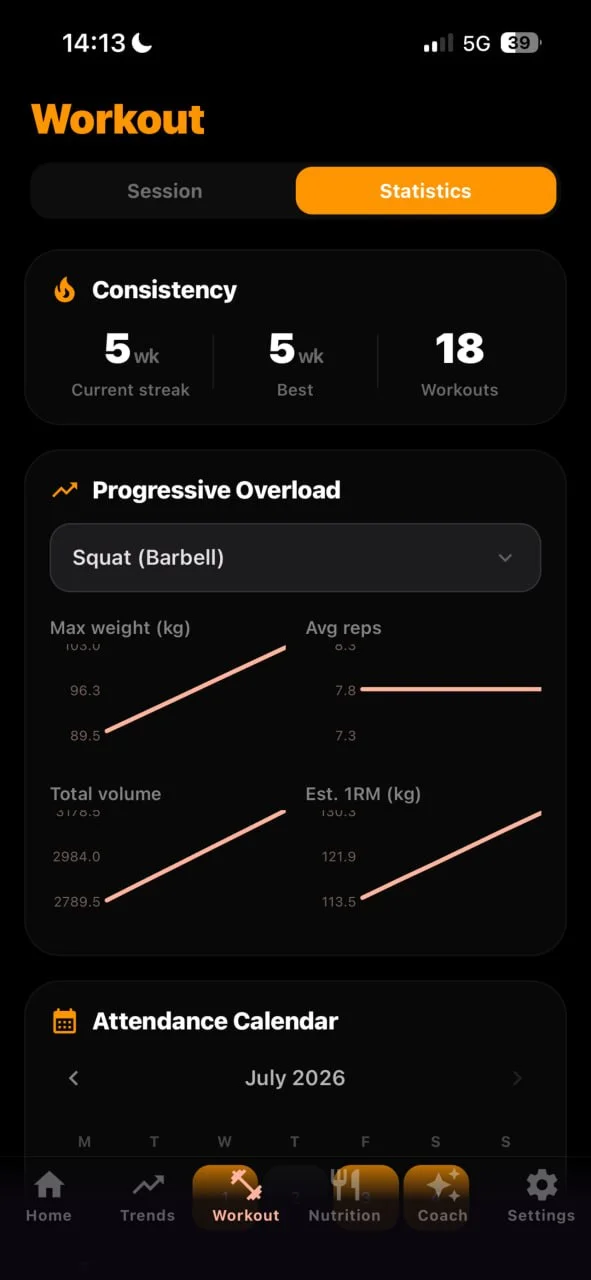
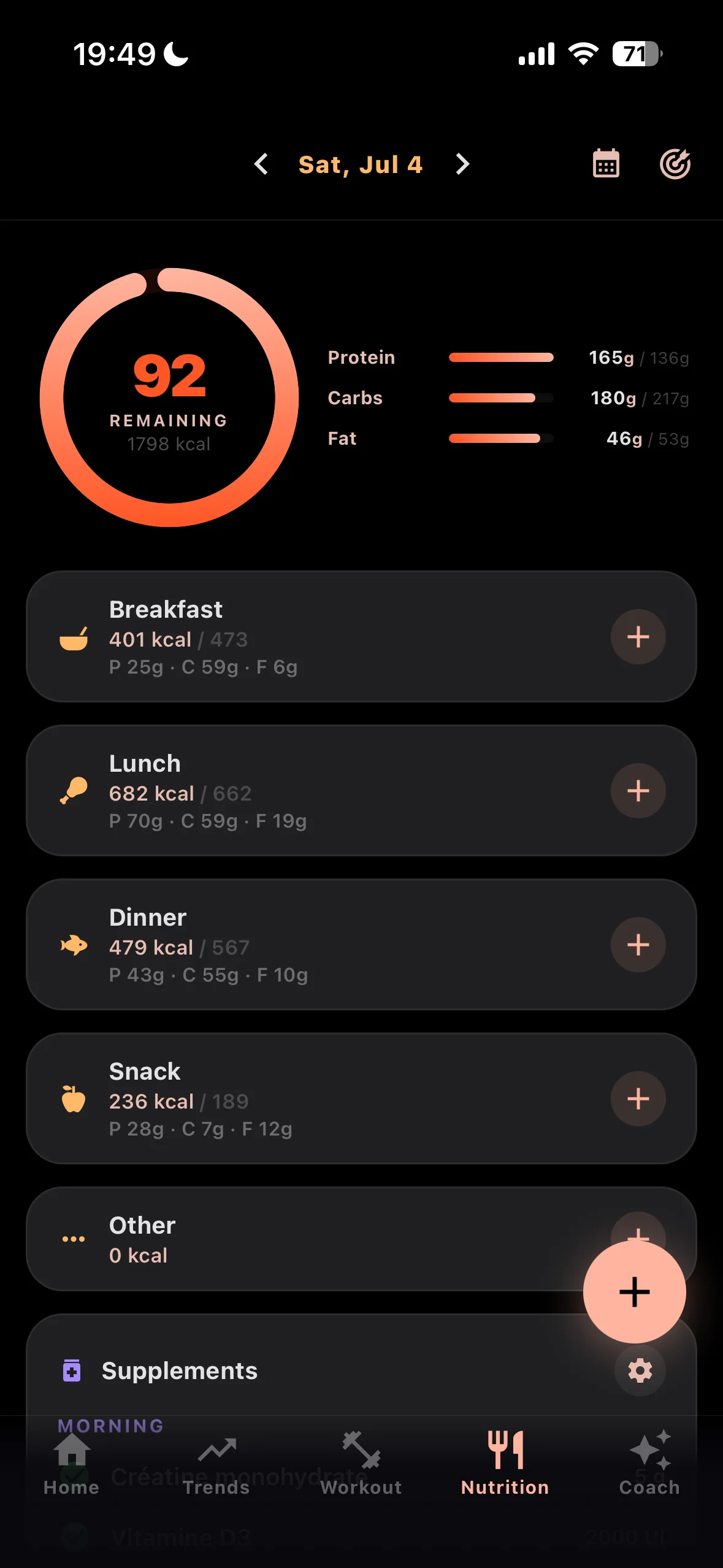
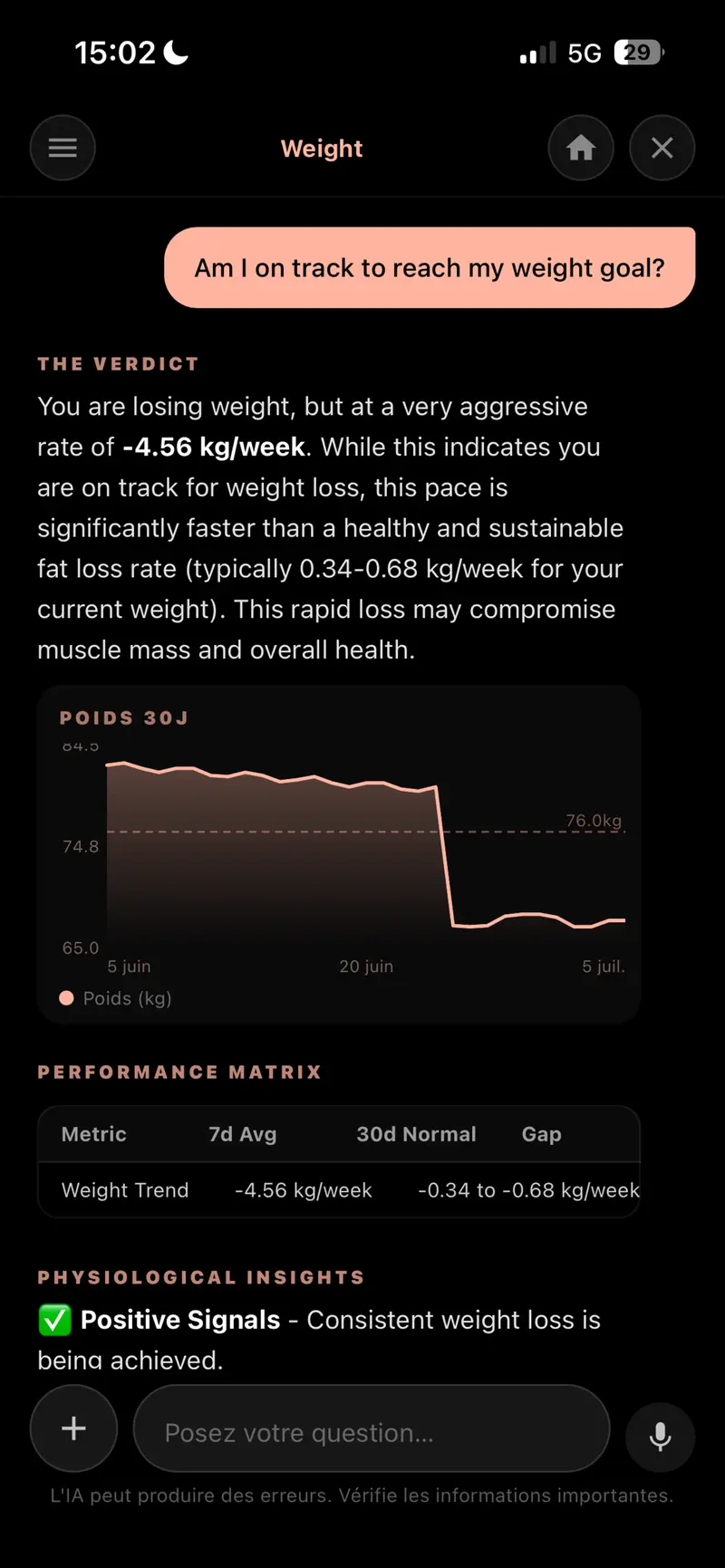
Atlo is not a direct competitor to MyFitnessPal or Cronometer, it's a different category. Where the other two are calorie trackers (you log what you eat), Atlo is a holistic performance platform that automatically cross-references three pillars: nutrition, training, and recovery.
Its multi-agent AI coach does what no tracker does: it analyzes your nutrition data, your workouts, and your recovery (sleep, HRV) to generate contextualized recommendations. For example: 'Your calories are fine but your protein intake is too low for this week's training load. Here's an adjusted meal plan.'
🎯 Our Verdict: Which One to Choose Based on Your Profile?
There's no universal winner, it all depends on what you expect from a nutrition tracker. Here are our recommendations by profile.
Choose MyFitnessPal if...
You want the world's largest food database. For rare foods, restaurant dishes, or international products, MFP has no equal. If you consume many varied and imported products, it's the best choice.
You already use a fitness app ecosystem (Garmin, Strava, Fitbit). MFP integrates with almost everything, and automatic burned-calorie syncing is a real time-saver.
Choose Cronometer if...
You want precise micronutrient tracking. Cronometer tracks over 80 vitamins and minerals with verified data. It's the tool of choice for dietitians and athletes who optimize their nutrition to the gram.
You want a genuinely usable free tracker. Cronometer's free version includes the barcode scanner, full micronutrient tracking, and no ads. MFP's free tier doesn't compare.
You distrust crowdsourced data. If the reliability of nutritional information matters more than quantity, Cronometer's verified database (NCCDB, USDA) is a guarantee of trust.
Choose Atlo if...
You don't just want to track calories, you want to understand the cross-impact of your nutrition, training, and recovery. Atlo is the only platform that analyzes these three dimensions together through its multi-agent AI, generating personalized recommendations (meal plans, training programs, recovery adjustments).
You're looking for an intelligent coach, not just a logbook. Atlo's AI coach remembers your goals, preferences, and dietary restrictions. It adapts its recommendations over time and can analyze your blood test results or existing training programs.
📚 Sources and References
All prices and features mentioned in this article were verified in August 2026. Our tests were conducted on the Premium version of MyFitnessPal and Gold version of Cronometer.
🔗 Atlo Resources
Explore our other guides and tools:
Best nutrition app
Our complete comparison of the best nutrition apps in 2026.
Yazio vs MyFitnessPal
Our detailed comparison of the two most popular calorie trackers.
TDEE Calculator
Calculate your daily energy expenditure with our free tool.
Atlo AI Coach
Discover how our multi-agent AI cross-references nutrition, exercise, and recovery.
❓ FAQ
📖 Read next
Best Nutrition App 2026: Our Complete Comparison
Yazio vs MyFitnessPal: Which Tracker to Choose in 2026?
Ready to go beyond simple calorie counting?
Join the Atlo waitlist to discover a platform that automatically cross-references your nutrition, training, and recovery, with an AI coach that guides you daily.
lockNo spam. We'll email you at launch.