Foodvisor vs Cronometer: Which Nutrition App Should You Choose in 2026?
Foodvisor or Cronometer? Compare photo logging, micronutrient tracking, and the limits of these two nutrition apps.
Summarize this article with
The essentials in 30 seconds
Foodvisor prioritizes fast photo logging. Cronometer prioritizes nutritional granularity. The right choice depends on the level of detail you will genuinely use every day.
- 1.Choose Foodvisor if beginning with a photo reduces friction. Then check portions, sauces, and ingredients outside the frame.
- 2.Choose Cronometer if vitamins, minerals, and verified data guide your tracking. Its approach calls for more reading and care.
- 3.Our verdict: Foodvisor helps build the logging habit, while Cronometer helps examine nutritional quality. Neither replaces personalized medical advice.
- 4.A third approach exists for connecting food, training, and recovery. Atlo is in pre-launch with a 7-day free trial, then €8.99/month.
Interactive Quiz
Which nutrition tracker fits your routine?
Answer 6 quick questions to clarify your priority.
How do you prefer to log a meal?
📖 Foodvisor or Cronometer: Two Food-Tracking Philosophies
Foodvisor and Cronometer do not solve the same problem with the same priority. Foodvisor aims to shorten the first action, notably with photography. Cronometer aims to make food data more detailed, from macros to micronutrients.
A complex meal does not become exact simply because it was photographed, and a detailed database does not automatically make a routine sustainable. Start with a simple question: do you prefer less friction or more control over the data?

📱 The Apps in Detail
We evaluated logging flows, publisher information, and conditions visible in October 2026. The screenshots below come from official listings and illustrate the interfaces offered to users.
1. Foodvisor: Starting with a Photo
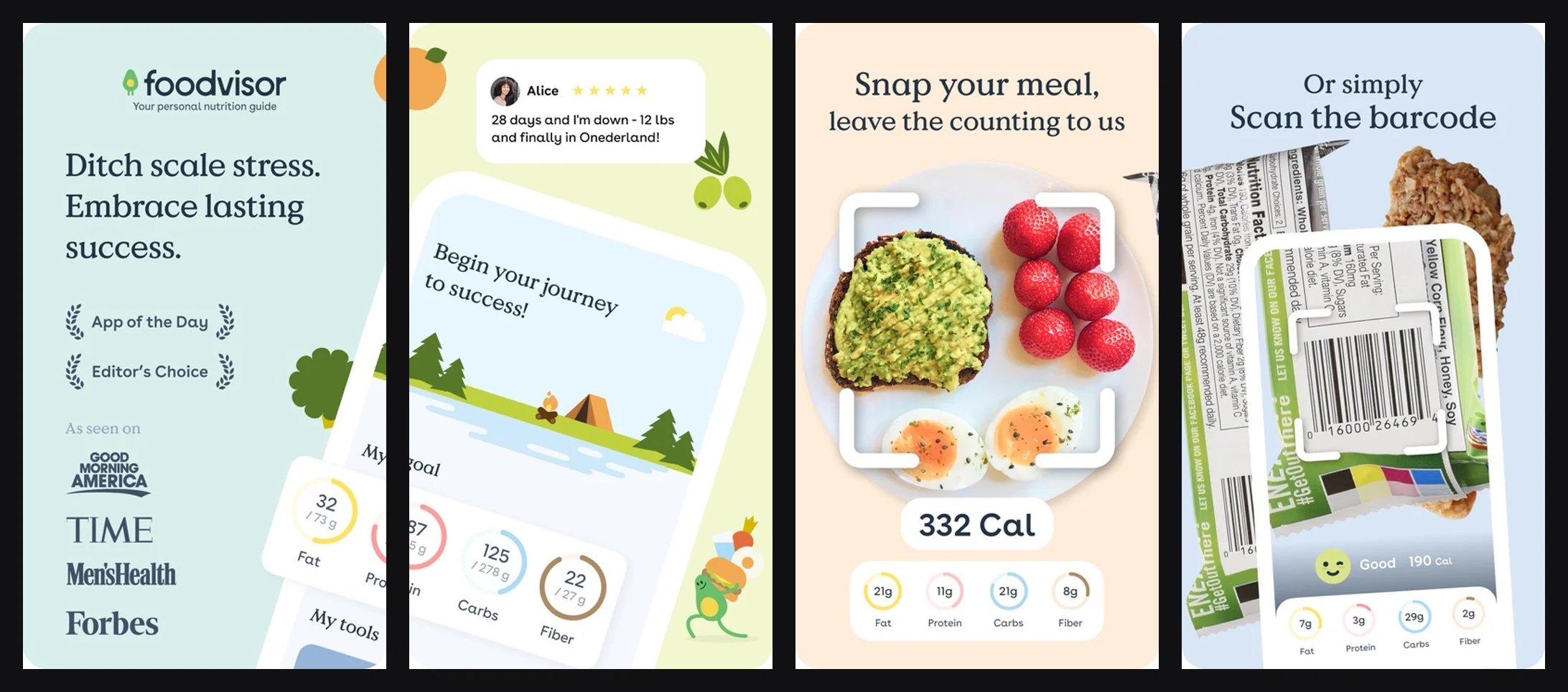
Foodvisor is useful when logging itself stops you from keeping a diary. A photo can provide a quick starting point for a simple plate, provided you then correct the portion, oil, sauces, and any misidentified ingredients.
Foodvisor is less suitable if you want exhaustive nutrition precision without manual checks. Mixed dishes and homemade recipes remain cases where the user needs to take control.
2. Cronometer: Understanding Nutrient Density
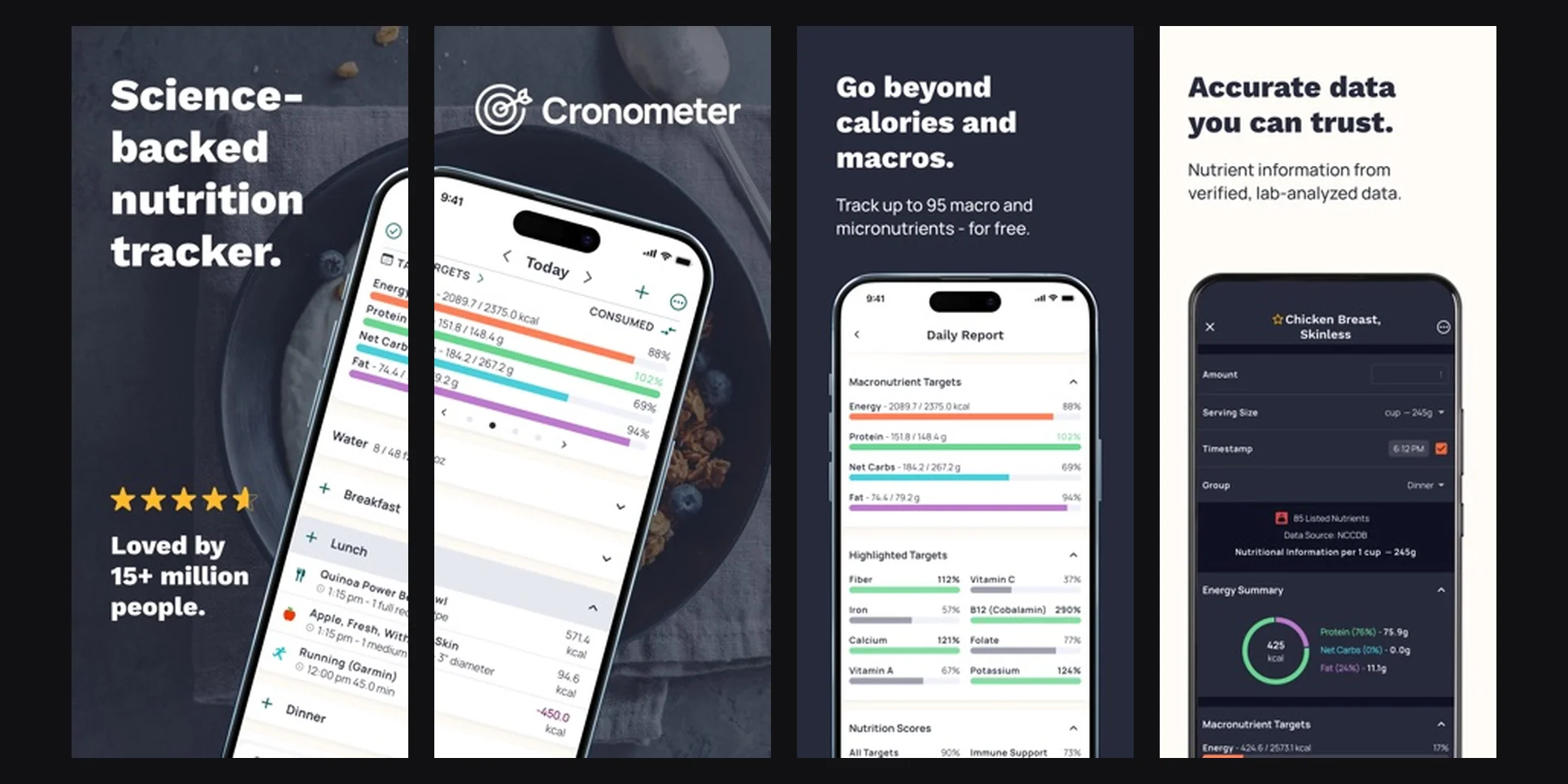
Cronometer is more compelling when nutrient detail genuinely informs your decisions. Its official page highlights tracking calories, macros, vitamins, and minerals, along with connections to health and activity data.
That depth has a trade-off: it can slow down a beginner. If you never review micronutrient reports, a very detailed interface does not necessarily add more value than a simple, consistent diary.
⚖️ Head-to-Head Comparison
This table summarizes how well each app fits a use case, it does not measure clinical truth. The stars are an editorial assessment of positioning, not a medical rating.
| Criterion | Foodvisor | Cronometer | Atlo |
|---|---|---|---|
| Photo-first start | ★★★★★ | ★★☆☆☆ | ★★★★☆ |
| Vitamins and minerals | ★★★☆☆ | ★★★★★ | ★★★★★ |
| Ease for beginners | ★★★★★ | ★★★☆☆ | ★★★☆☆ |
| Nutrition and training | ★★☆☆☆ | ★★★☆☆ | ★★★★★ |
| Recovery and sleep | ★☆☆☆☆ | ★★☆☆☆ | ★★★★★ |
🔬 How We Compared Foodvisor and Cronometer
Our comparison focuses on concrete actions: logging breakfast, checking a packaged product, and describing a homemade meal. We looked at starting speed, correction options, information clarity, nutritional detail, and usefulness for an active person.
Product information is checked against official Foodvisor and Cronometer pages, supplemented by the 2026 comparison published by nutrola.app. The conclusions remain an editorial synthesis and do not replace advice from a dietitian or doctor.
 When Atlo Is More Relevant
Atlo does not aim to be only a calorie counter. The platform brings nutrition, training, and recovery together in one dashboard. Its multi-agent AI coach can cross-reference data from these three domains and explain its recommendations.
Atlo nutrition tracking covers more than 100 metrics per food, CIQUAL, USDA, and Open Food Facts databases, photo analysis, barcode scanning, recipes, and custom foods. The app also tracks sessions, progression, and sleep, HRV, and recovery indicators.
3. Atlo: Connecting Decisions Rather Than Counting Alone
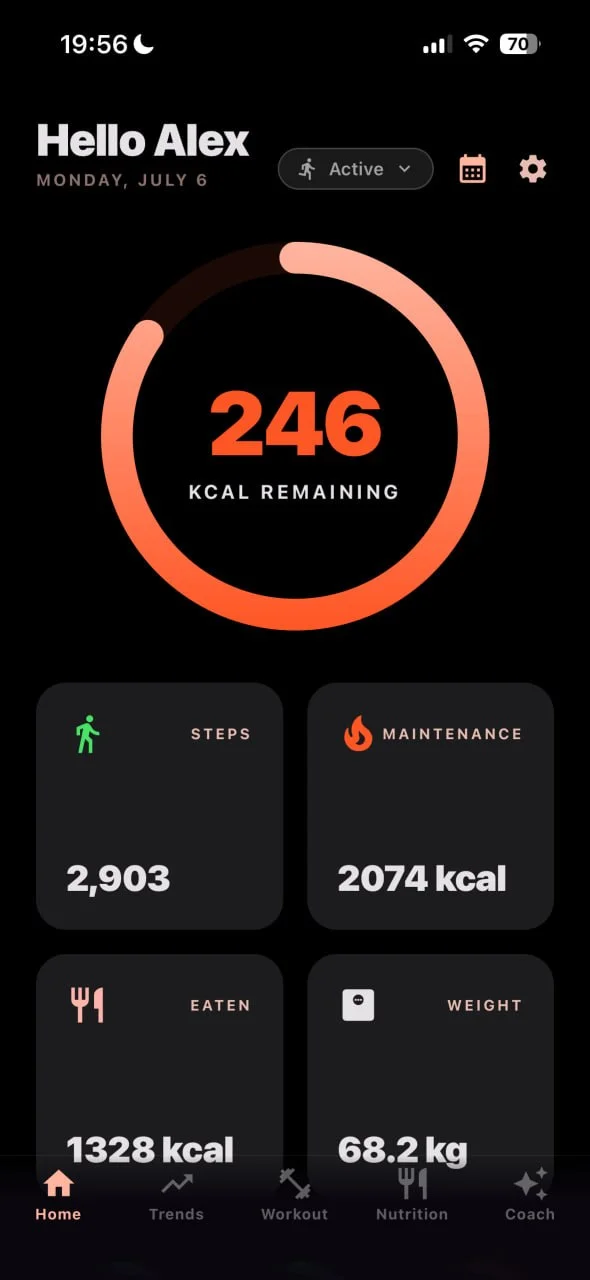
Atlo fits when a food diary should inform training and recovery. It is not the simplest choice if you only want to search for one food or review a few calories.
🎯 Our Verdict by User Profile
Foodvisor wins when your priority is logging without delaying the meal. Its photo recognition offers a convenient start, but it remains an estimate worth correcting for complex portions.
Cronometer wins when your priority is reading beyond calories. People attentive to vitamins, minerals, and detailed nutrition data will find a stronger framework, provided they accept a more methodical routine.
Atlo becomes relevant when you want to interpret nutrition alongside your sessions and recovery. The product is in pre-launch, with a 7-day free trial, then €8.99/month.
📚 Sources and references
These sources let you verify product information and the context for this comparison. Consulted in October 2026.
🔗 Atlo Resources
To go further, explore these Atlo comparisons and tools.
❓ FAQ
📖 Read next
Want to connect nutrition, exercise, and recovery?
Join the Atlo waitlist to follow the launch of our performance platform and its multi-agent AI coach.
lockNo spam. We'll email you at launch.